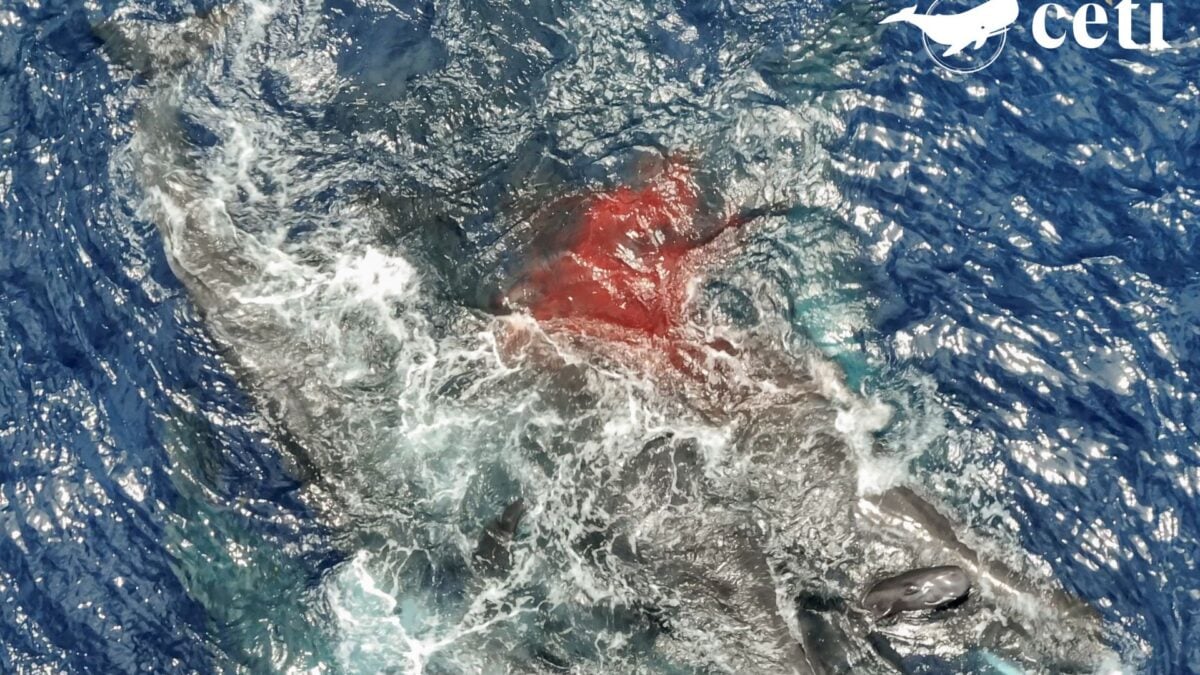
Childbirth is one of life's most transformative moments—beautiful, powerful, and often exhausting. While we often think of human mothers as uniquely dependent on support during labor, stunning new footage reveals that sperm whales have their own remarkable tradition of birthing assistance that rivals any human delivery room.
Researchers at Project CETI have just released unprecedented images showing sperm whales actively supporting a mother during the birthing process. The footage captures what can only be described as a pod-level commitment to ensuring a safe delivery, with whales positioning themselves strategically around the laboring mother. It's a window into a side of whale society that scientists have rarely—if ever—documented before.
What makes these images so significant isn't just their rarity, but what they tell us about sperm whale intelligence and social bonds. These aren't random whales gathering out of curiosity. The behavior suggests a deep understanding of the vulnerabilities mothers face during childbirth and an instinctive drive to protect both mother and calf during this critical time. The whales appear to provide both physical support and protective cover, creating a safe space for birth in the open ocean.
For decades, marine biologists have known that sperm whales are among the ocean's most intelligent creatures. They communicate through complex clicks, organize into family groups, and demonstrate problem-solving abilities that astound researchers. But this footage adds another layer to our understanding: these whales possess not just intelligence, but genuine compassion and cooperative behavior that transcends survival instincts.
The discovery comes from Project CETI (Cetacean Translation Initiative), an ambitious research collaboration aimed at understanding whale communication and behavior. By combining cutting-edge technology with patient field observation, these researchers have managed to capture moments that would have been impossible to document just a few years ago.
What's particularly striking about this footage is how it mirrors human childbirth practices across cultures. Just as women have relied on midwives, doulas, and family members for support and guidance through labor, these sperm whales are demonstrating that birthing assistance isn't uniquely human—it's a mammalian instinct refined through generations of social living.
This discovery has profound implications for how we understand animal behavior and consciousness. It suggests that empathy, nurturing, and community care are fundamental values that exist far beyond human society. These whales aren't acting on instinct alone; they're demonstrating deliberate, thoughtful support for a vulnerable member of their pod.
As our oceans face unprecedented challenges from climate change, pollution, and overfishing, understanding the complexity and depth of whale society becomes increasingly urgent. Images like these remind us why protecting these magnificent creatures matters—not just for ecological balance, but for preserving one of nature's most touching expressions of care and community.
The sperm whales in these images are teaching us a valuable lesson about the universal importance of showing up for one another during life's most vulnerable moments. In the depths of the ocean, just as in human homes and hospitals, bringing new life into the world is a community affair.
No comments yet. Be the first!