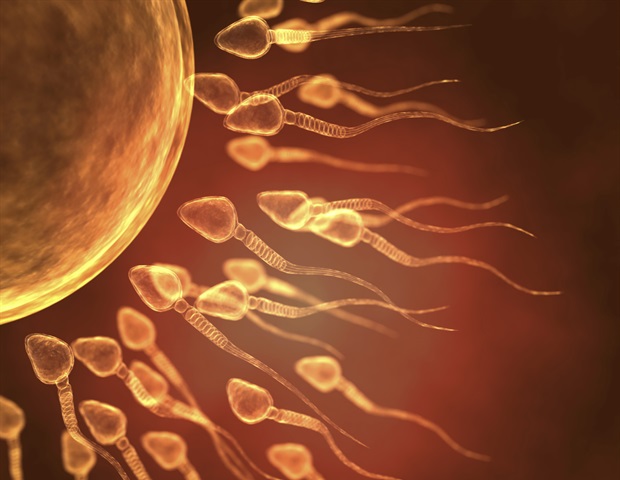
The dream of humanity spreading across the cosmos just got a little more complicated. New research from the University of Adelaide's Robinson Research Institute reveals that the weightless environment of space poses an unexpected obstacle to one of life's most fundamental processes: reproduction.
Scientists have discovered that microgravity significantly impairs sperm's ability to navigate through the reproductive tract—a finding that could have major implications for long-term space exploration and the future of human settlement beyond Earth.
## The Challenge of Space Navigation
Sperm cells are remarkably sophisticated travelers. Under normal conditions on Earth, they rely on a combination of chemical signals, physical cues, and their own propulsion mechanisms to navigate the female reproductive tract. It's a complex journey that requires precision and adaptability. However, when gravity is removed from the equation, this finely-tuned navigation system starts to fall apart.
Researchers at Adelaide University conducted experiments to understand exactly how microgravity affects sperm behavior. The results were clear: without gravity's influence, sperm lose their sense of direction and struggle to move efficiently toward their destination. This isn't just a minor inconvenience—it's a genuine biological problem that could affect the success of fertilization in space environments.
## Why This Matters for Space Exploration
As space agencies and private companies increasingly plan for extended human missions—whether to the International Space Station, the Moon, or Mars—the ability to reproduce in these environments becomes a critical consideration. Previous research has highlighted various challenges of human biology in microgravity, from bone density loss to muscle atrophy. Now, reproductive challenges must be added to that growing list.
The implications are profound. If humanity is to establish permanent settlements in space or on other celestial bodies, we need to understand and potentially overcome these biological hurdles. This research provides valuable insight into one such hurdle, opening the door to finding solutions.
## Moving Forward
This discovery doesn't mean that conception in space is impossible—it simply means it will require more scientific understanding and perhaps innovative approaches. Researchers may need to develop new techniques or interventions to assist reproduction in microgravity environments, or we may need to reconsider how we approach human expansion into space.
The Adelaide University research team's work exemplifies how space exploration forces us to reckon with the realities of human biology in extreme environments. While the romance of starting a family on Mars might be appealing, the science suggests we still have considerable work to do.
As we continue to push the boundaries of human spaceflight, studies like this remind us that the challenges we face extend far beyond engineering and physics. Our own biology presents puzzles we're only beginning to understand. The good news? With research like this, we're getting smarter about solving them.
No comments yet. Be the first!