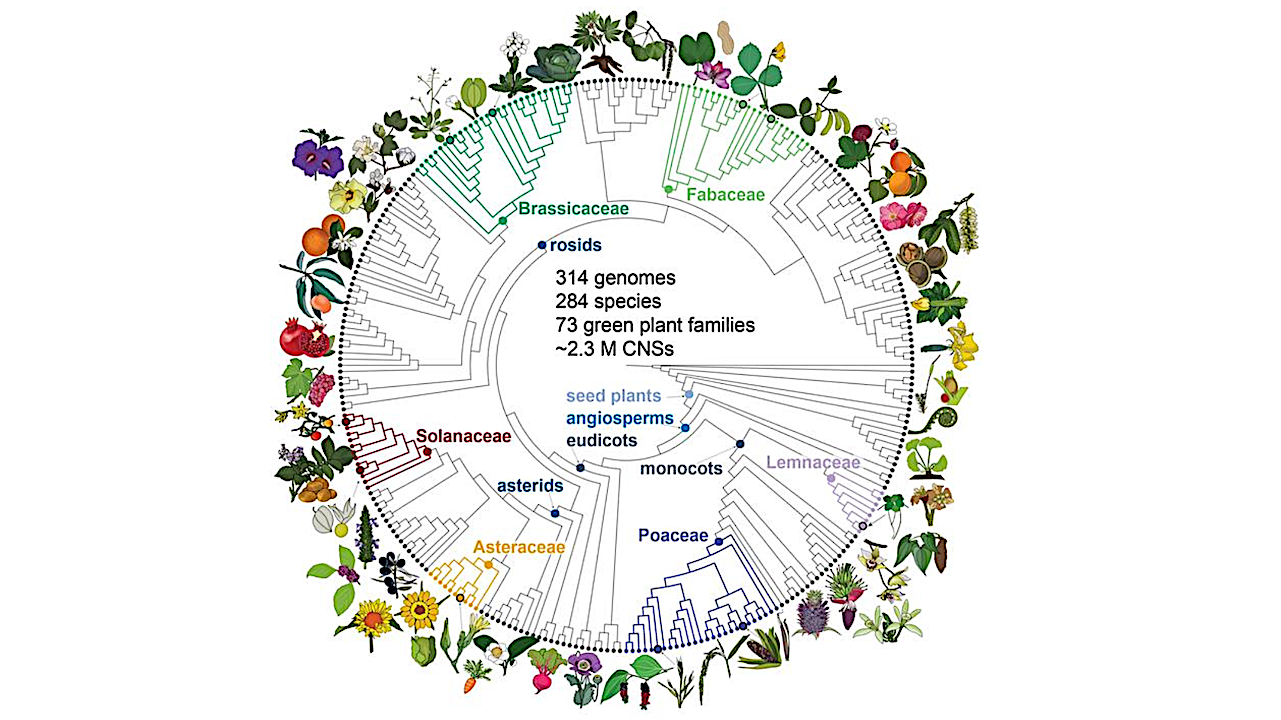
What if the secret to creating hardier, more productive crops was literally written in the ancient history of plant evolution? A remarkable new study suggests that's exactly the case. Researchers have traced thousands of conserved regulatory elements back 300 million years, uncovering deep principles of how plant genomes evolve—and opening exciting possibilities for more precise crop engineering.
## The Discovery That Changes Everything
The study represents a major breakthrough in understanding plant biology. By analyzing regulatory DNA sequences across multiple plant species, scientists identified thousands of these sequences that have remained virtually unchanged for hundreds of millions of years. These aren't random stretches of DNA—they're the genetic "control panels" that determine when, where, and how genes are turned on and off.
Why should we care about sequences that are millions of years old? Because stability equals predictability. If these regulatory elements have been conserved across such vast evolutionary timescales, it means they're doing something fundamentally important. And if we understand what they do and how they work, we can harness that knowledge to improve crops.
## From Ancient Genes to Modern Agriculture
The implications for agriculture are genuinely exciting. For decades, crop breeding has relied heavily on trial-and-error approaches—crossing plants with desirable traits and hoping the offspring inherit them. While this method works, it's slow and imprecise. Understanding the deep principles of regulatory element function opens the door to something far more powerful: the ability to predict how specific genetic changes will affect plant traits.
Imagine being able to engineer crops with greater precision by targeting these ancient regulatory sequences. Scientists could potentially create plants that are more drought-resistant, nutrient-dense, or productive—without the guesswork that has traditionally slowed agricultural innovation.
## What This Means for Our Food Future
As climate change poses growing challenges to global food security, the ability to engineer crop traits more precisely becomes increasingly important. Plants that can thrive in drier conditions, resist new pests, or provide better nutrition could be transformative—especially in regions most vulnerable to climate impacts.
The study also reveals something profound about evolution itself. The fact that these regulatory sequences have been conserved across 300 million years of plant evolution suggests that certain genetic "solutions" are so effective that nature rarely improves upon them. This is valuable knowledge for scientists: it tells us where evolution has already done the hard work, and where we should focus our engineering efforts.
## Looking Forward
While this research is still early-stage, the potential is enormous. By understanding the evolutionary logic embedded in plant genomes, scientists can move beyond simply copying nature and toward intelligently improving upon it. The ancient regulatory elements discovered in this study aren't just relics of the past—they're blueprints for building better crops.
The next time you bite into a tomato or ear of corn, you might be eating the results of genetic engineering informed by principles that have worked perfectly for hundreds of millions of years.
No comments yet. Be the first!