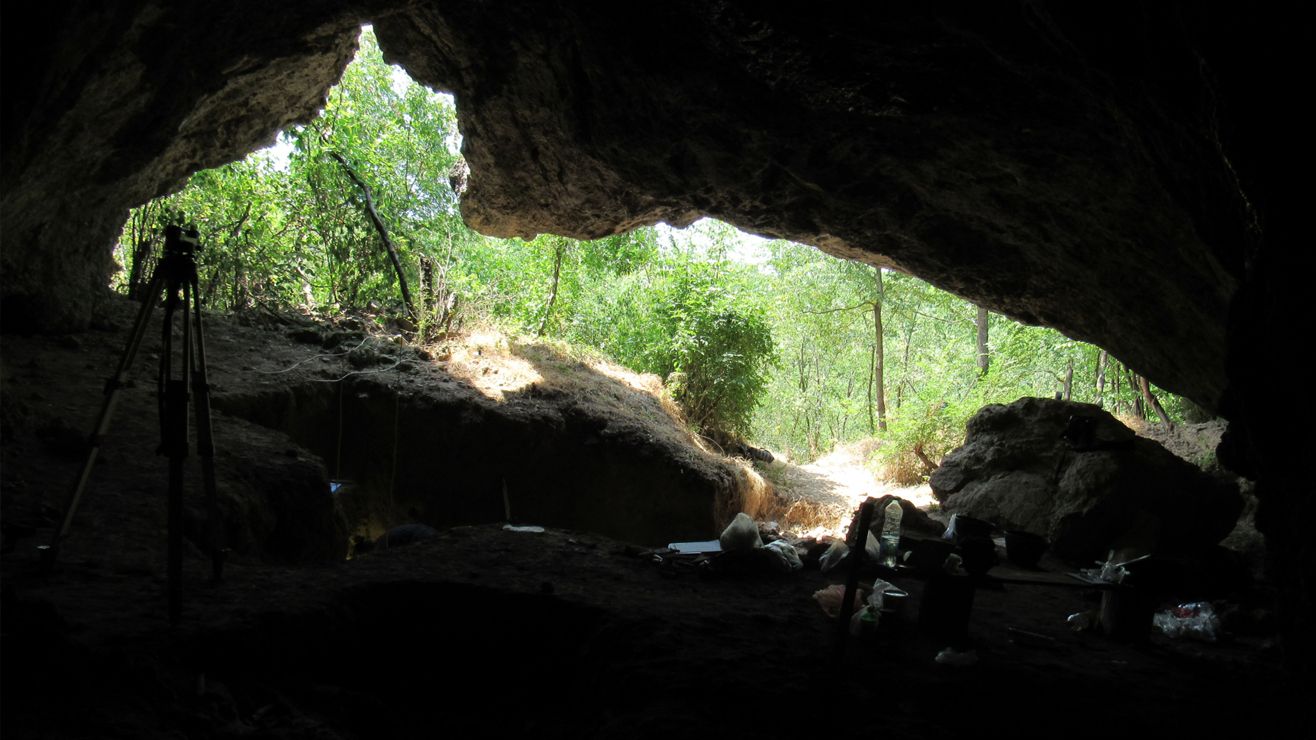
We often think of Neanderthals as a relatively uniform group that simply went extinct, but a fascinating new study published in PNAS (Proceedings of the National Academy of Sciences) on March 23 reveals a far more dramatic story. Before these ancient humans disappeared entirely, they experienced a catastrophic genetic bottleneck that nearly wiped them out completely.
According to the research, approximately 65,000 years ago, something went terribly wrong for Neanderthal populations across Europe. The vast majority of their genetic lineages vanished, leaving only a single line of descent to carry on the species. What makes this discovery even more remarkable is what happened next: that one surviving lineage didn't just persist—it flourished, expanding across the entire European continent.
This finding fundamentally changes how we understand Neanderthal history. Rather than a species that gradually faded away, we now see a population that experienced a dramatic near-extinction event, followed by a period of recovery and expansion. It's a story of resilience against almost impossible odds, played out across the frozen landscapes of Ice Age Europe.
So what caused this catastrophic die-off? Scientists point to several possibilities. Environmental pressures during this period were intense, with climate fluctuations creating harsh conditions that would have stressed already vulnerable populations. Competition with other human groups, including early modern humans who were beginning to spread into Europe, may have also played a role. Additionally, the small population sizes that resulted from this bottleneck would have made Neanderthals even more susceptible to future challenges—a pattern we see repeated in many endangered species today.
What's particularly intriguing about this research is what it tells us about genetic diversity and population bottlenecks. When a population is reduced to such a small number, the genetic variation within that group drops dramatically. All surviving Neanderthals after this event would have been descended from a single ancestral lineage, meaning they would have been far more genetically similar to each other than their ancestors had been. This reduced genetic diversity may have made them more vulnerable to disease, environmental stress, and other challenges—potentially setting the stage for their eventual extinction roughly 20,000 years later.
The study represents a significant advance in our ability to understand ancient populations through genetic analysis. By examining the DNA evidence preserved in Neanderthal fossils, researchers can now reconstruct population-level events that occurred tens of thousands of years ago with remarkable precision.
This research reminds us that the story of human evolution isn't a simple linear progression. Instead, it's filled with drama—population crashes, miraculous survivals, and demographic upheavals that shaped which lineages persisted and which disappeared into the mists of time. The Neanderthals' 65,000-year-old crisis is just one chapter in that epic tale.
No comments yet. Be the first!