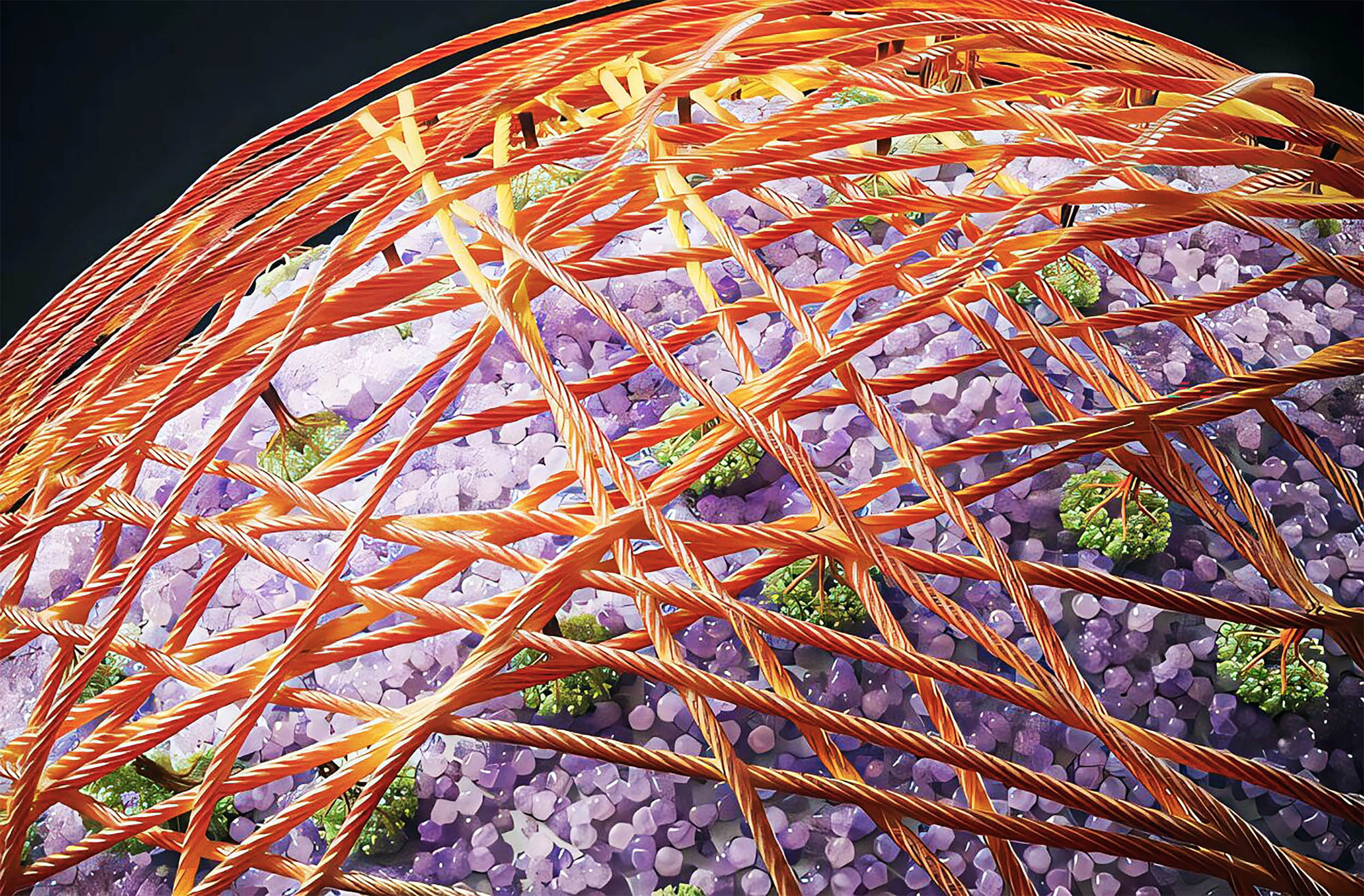
In a groundbreaking scientific achievement, researchers have accomplished what was once thought impossible: watching plants construct their cell walls in real time. Using advanced microscopy techniques, a dedicated team of scientists captured the first continuous footage of cellulose being synthesized and self-assembled into the complex scaffolding that provides plant cells with their structural integrity.
This discovery represents more than just a fascinating glimpse into plant biology—it's a window into one of nature's most fundamental construction processes. Cell walls are critical to plant survival, providing structural support, protection, and the rigidity that allows plants to grow upward against gravity. Yet for decades, scientists could only study the end result, never the actual building process itself.
The breakthrough came through the application of advanced microscopy technology that allowed researchers to observe cellulose molecules organizing themselves at a level of detail previously impossible to achieve. What they witnessed was nothing short of remarkable: individual cellulose strands aligning and bonding together in an orchestrated dance of molecular precision, gradually forming the robust lattice framework that characterizes plant cell walls.
Understanding this process has profound implications for multiple fields of study and application. For plant biologists, it provides crucial insights into how plants grow and develop. For agricultural scientists, it opens new possibilities for enhancing crop resilience and yield. The findings could even have applications in materials science, where researchers seek to develop stronger, more sustainable plant-based materials.
The significance of this discovery cannot be overstated. Cellulose is one of the most abundant biological polymers on Earth, yet the mechanism of its assembly has remained largely mysterious. By finally observing this process directly, scientists have gained access to fundamental knowledge about how plants construct themselves at the molecular level.
This research also highlights the importance of technological advancement in scientific discovery. The microscopy techniques used in this study represent years of development and refinement, demonstrating how innovation in tools can unlock entirely new areas of understanding. As these technologies continue to improve, we can expect even more detailed observations of biological processes we've long taken for granted.
The team's achievement invites us to reconsider what we think we know about the natural world. Plants, which we often perceive as static and unchanging, are in fact engaged in constant, intricate molecular work. Every cell wall represents countless molecular interactions occurring in perfect coordination. By witnessing this process firsthand, scientists have added another layer to our understanding of the remarkable engineering that nature employs.
As research in this area continues to expand, we may find ourselves reimagining not only how plants work, but also how we can apply these natural construction principles to human innovations in materials, architecture, and sustainability.
No comments yet. Be the first!