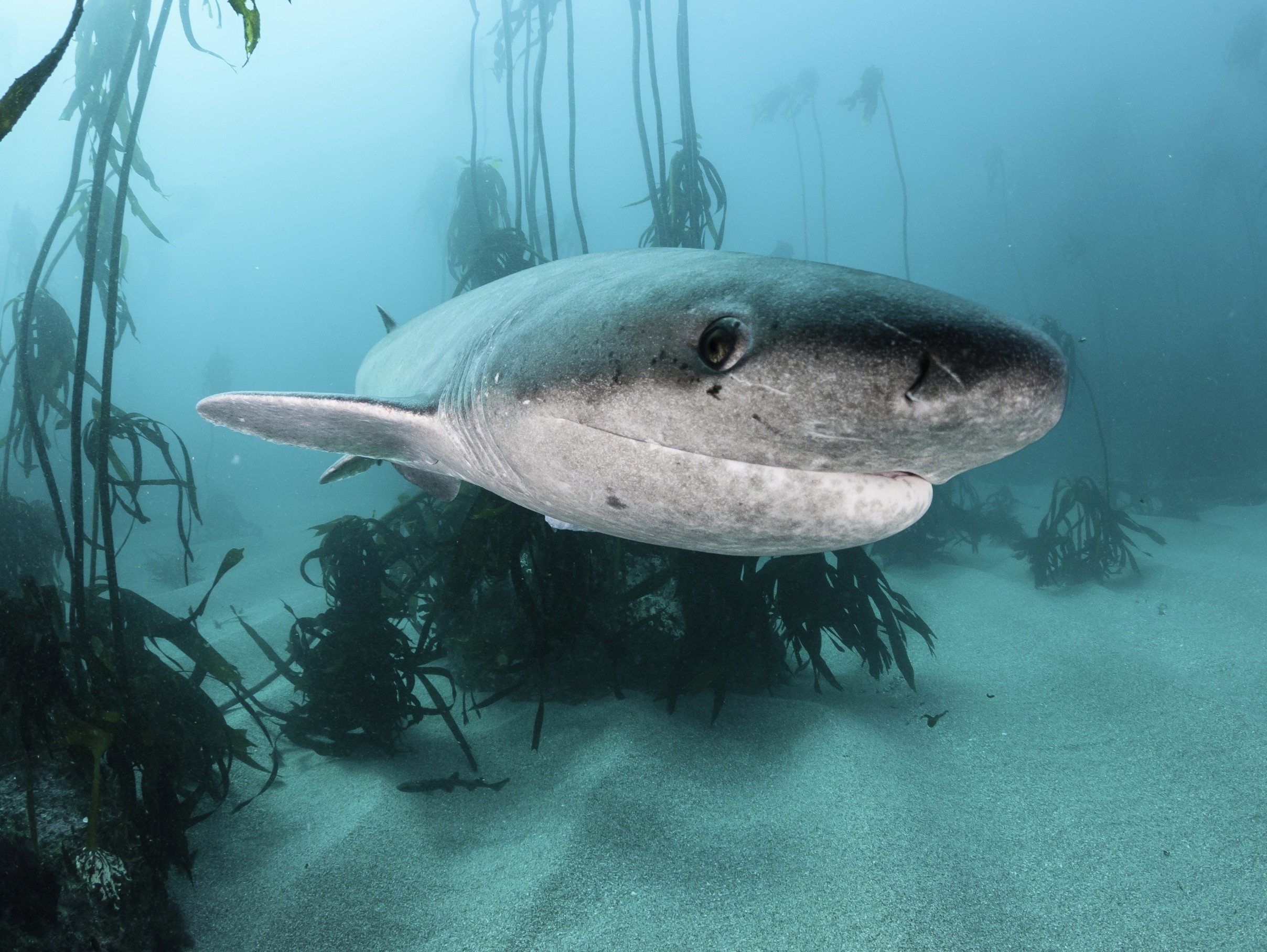
The ocean has always been a place of drama, danger, and survival. But new research is pulling back the curtain on a prehistoric narrative we never knew existed: the relationship between ancient sharks and whales in the North Sea millions of years ago.
According to a recent study, sharks were feeding on whales in the North Sea approximately five million years ago. The evidence? Fossilized whale skulls that contain embedded shark teeth—physical proof of predator-prey interactions frozen in time.
## What the Fossils Tell Us
This discovery isn't just about finding old teeth. The placement and nature of these tooth fragments provide crucial insights into how these ancient sharks behaved. The research indicates that sharks employed different feeding strategies: some were scavengers, taking advantage of dead whales, while others were more aggressive hunters, directly attacking living whales.
This dual approach makes sense from an evolutionary perspective. Not every shark would have the ability or size to successfully hunt a living whale, but all of them could benefit from a free meal when a whale carcass became available. The fact that both behaviors are evident in the fossil record shows us a complex marine ecosystem where multiple survival strategies coexisted.
## A Glimpse Into Ancient Marine Life
What makes this finding particularly fascinating is what it reveals about the North Sea ecosystem of that era. Five million years ago, the region was inhabited by whale populations large enough to sustain predatory sharks. This suggests a thriving marine environment with abundant food sources and diverse species interactions.
The fossilized whale skulls act as historical documents, each tooth embedded within them telling a story of survival, struggle, and the constant dance of predator and prey that defined ocean life. These aren't random artifacts—they're evidence of actual predation events that occurred millions of years ago.
## Understanding Prehistoric Predator Behavior
The distinction between hunting and scavenging behavior is important for understanding ancient shark ecology. Scavenging requires opportunism and the ability to detect carrion, while hunting demands speed, coordination, and the physical prowess to overcome a massive, living whale. That ancient sharks exhibited both behaviors demonstrates their adaptability and intelligence as predators.
This research adds another layer to our understanding of how sharks have evolved and adapted over millions of years. Rather than viewing them as simple, unchanging predators, we can now appreciate them as sophisticated hunters capable of adjusting their strategies based on available resources.
## Why This Matters Today
Studying ancient shark-whale interactions helps us better understand modern marine ecosystems and how apex predators function within complex food webs. It also reminds us that the relationships between ocean species have deep evolutionary roots, shaped over millions of years of interaction and adaptation.
As we face modern challenges to marine conservation, understanding these ancient dynamics provides valuable context for how healthy ocean ecosystems maintain balance through predator-prey relationships. The North Sea's prehistoric past offers lessons for protecting its future.
No comments yet. Be the first!