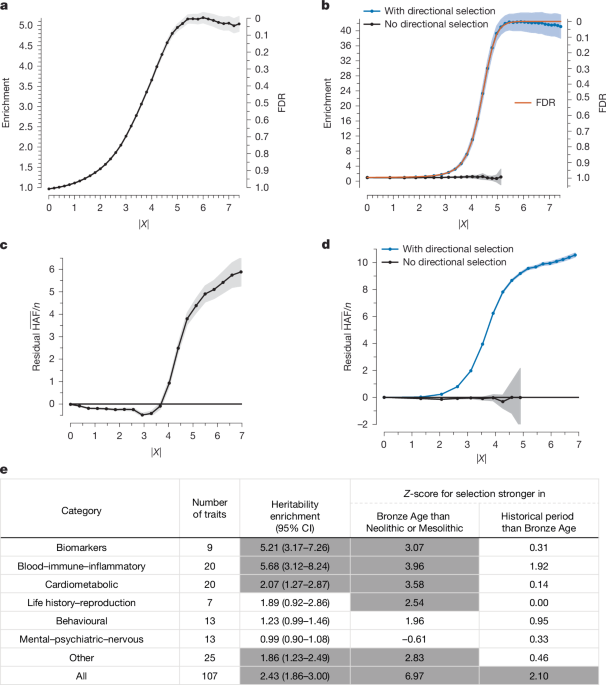
For decades, evolutionary biologists have theorized about natural selection's role in human history, but pinpointing exactly when and where it occurred has proven challenging. Now, researchers analyzing ancient DNA from across West Eurasia have uncovered remarkable evidence of pervasive directional selection—where evolution consistently favored specific genetic variants across populations and time periods.
This discovery represents a major milestone in ancient genomics, a field that has transformed our understanding of human prehistory over the past decade. By sequencing DNA from archaeological remains, scientists can now observe evolution in action, watching how populations adapted to their environments and how genetic pressures shaped our ancestors.
The research examined hundreds of ancient Eurasian genomes, creating an unprecedented window into the past. Rather than seeing random genetic drift, researchers found clear patterns of selection favoring particular traits. These weren't isolated instances but widespread, consistent pressures affecting multiple populations simultaneously.
Several factors likely drove this selection. Climate changes, new diseases, dietary shifts from the adoption of agriculture, and social developments all created evolutionary pressures. As humans transitioned from hunter-gatherer societies to agricultural communities, their genetics shifted accordingly. New pathogens favored certain immune variants, while different food sources selected for enhanced nutrient processing.
What makes these findings particularly striking is their prevalence. Rather than selection being rare or localized, it appears to have been a dominant force shaping West Eurasian genetics. This suggests that evolutionary adaptation to environmental and cultural changes happened more rapidly and thoroughly than previously appreciated.
These insights have profound implications for understanding modern human diversity. The genetic variations we observe today aren't simply random remnants of the past—they're the results of deliberate evolutionary pressures. Understanding these selection pressures helps explain why different populations developed distinct genetic profiles and susceptibilities to various diseases.
As ancient genomics continues advancing, we'll likely uncover even more details about how humans evolved. This research demonstrates that our genetic heritage tells a story of constant adaptation, innovation, and survival—a testament to human resilience across millennia.
No comments yet. Be the first!