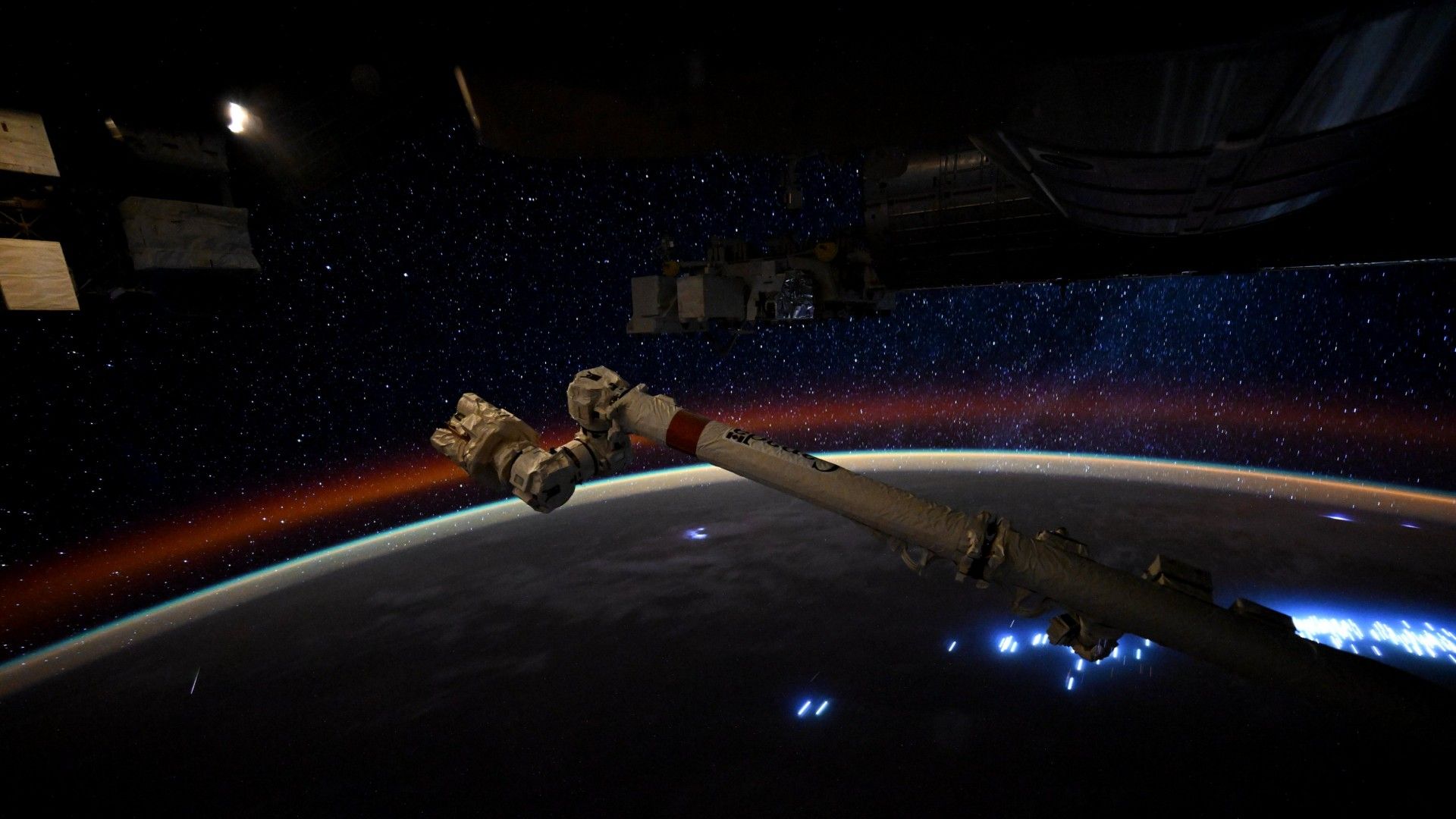
There's something uniquely special about meteor showers—they remind us that we're part of something vast and cosmic. But what's even more special? Experiencing one from 250 miles above Earth.
On April 20, NASA astronaut Jessica Meir shared a breathtaking photograph of the Lyrid meteor shower taken directly from the International Space Station. While millions of skywatchers on Earth prepare to crane their necks upward tonight (April 21) to catch the peak of this annual celestial event, Meir enjoyed a view that few humans ever will.
The Lyrid meteor shower is one of the oldest known meteor showers, with records of sightings dating back nearly 2,700 years. This year's display promises to be spectacular, with the shower peaking on the night of April 21st. Under ideal dark-sky conditions, observers can expect to see up to 20 meteors per hour streaking across the night sky.
What makes Meir's perspective so fascinating is how different meteors appear from space. While we on Earth see bright streaks as they burn through our atmosphere, astronauts aboard the ISS witness the phenomenon from an entirely different vantage point. Their photographs reveal the raw beauty of these cosmic visitors in ways ground-based observations simply cannot capture.
If you're planning to watch the Lyrid meteor shower tonight, find a location away from city lights, allow your eyes about 20-30 minutes to adjust to the darkness, and look up. You don't need binoculars or telescopes—just patience and clear skies. The best viewing typically occurs in the pre-dawn hours, between midnight and sunrise.
Whether you're watching from your backyard or, like Jessica Meir, from the cupola of humanity's orbital outpost, the Lyrid meteor shower connects us all to the cosmos. It's a humbling reminder that we share this planet and this universe with others who look up at the same sky—just from very different altitudes. So tonight, as you spot those brilliant streaks, know that somewhere above, an astronaut might be photographing the very same meteors you're witnessing.
No comments yet. Be the first!