Humans are the ultimate survivors. While other primates stick to familiar climates, Homo sapiens has spread across every continent, mastering environments so extreme they seem inhospitable to life itself.
Take the Bajau people of Southeast Asia. These remarkable free divers spend four to five hours daily underwater, hunting fish with nothing but a spear and their lungs. Over generations, their bodies have actually evolved—their spleens enlarged to store oxygen, allowing them to descend deeper and stay submerged longer than most humans could ever manage.
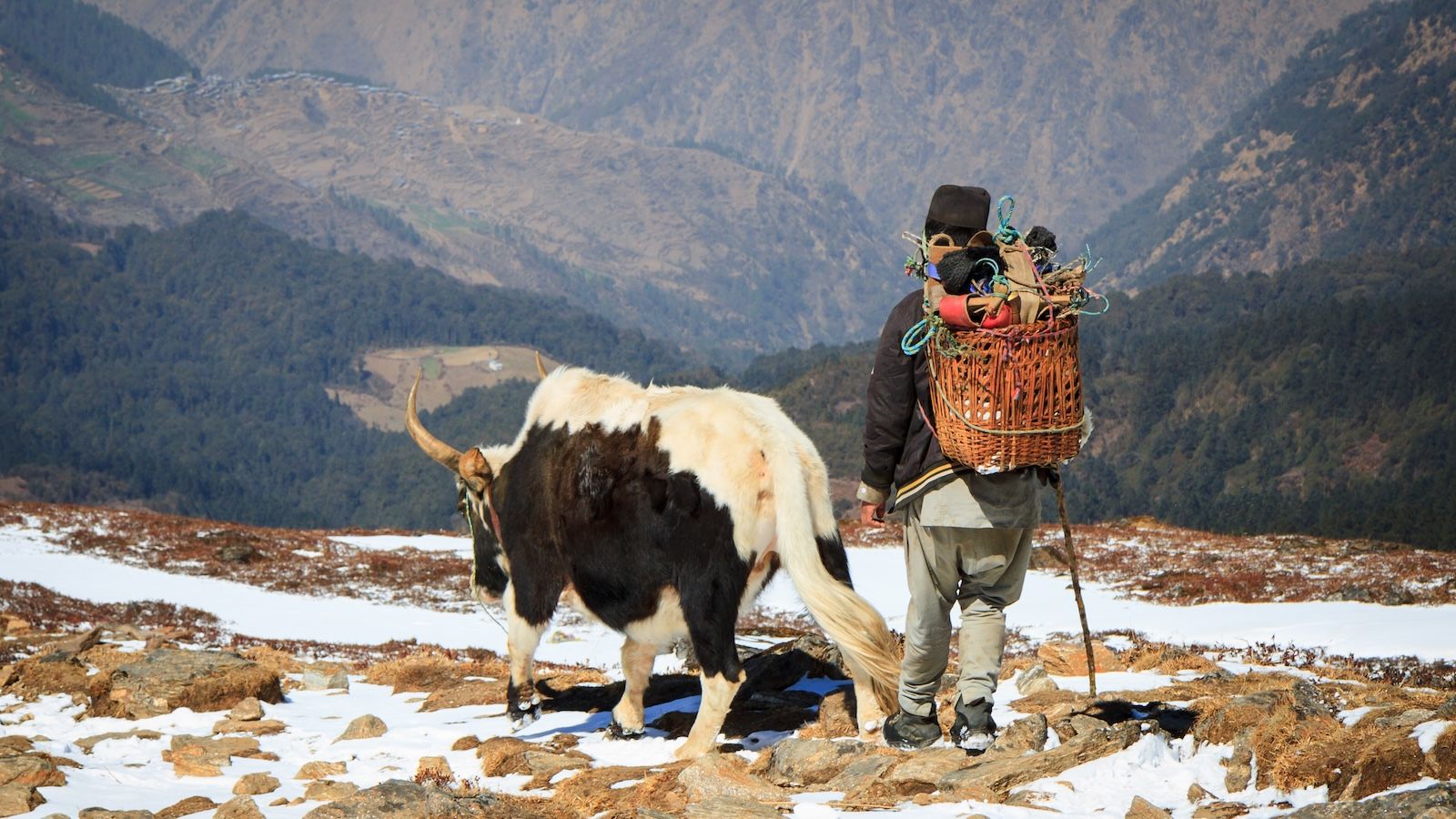
Or consider the Sherpa communities of the Himalayas. Living at altitudes where oxygen levels are brutally low, they've developed genetic variations in how their bodies process oxygen, allowing them to work at heights that would leave most of us gasping and dizzy. They don't just survive there—they thrive.
What makes these adaptations possible isn't just biological luck. It's the stunning interplay between nature and culture. The Bajau didn't evolve their diving abilities in isolation; their cultural practices—teaching children to swim before they walk, constant practice from childhood—combined with natural selection created a population uniquely suited to underwater life.
The same pattern repeats globally. High-altitude communities developed cultural practices like slower initial ascents and specific diets that complement their genetic adaptations. Desert dwellers engineered water management systems while their bodies adapted to conserve every precious drop.
This isn't about humans being superhuman. It's about something more profound: our species' unmatched flexibility. We don't just adapt biologically through evolution; we adapt culturally, technologically, and socially. We develop tools, share knowledge, and pass down survival strategies through generations.
That's why we're everywhere. While other primates depend on forests or grasslands, humans engineered solutions for ice, desert, mountain, and sea. We turned extreme environments into homes.
As climate change reshapes Earth's landscape, this adaptive capacity—both biological and cultural—will be crucial to our future. We've conquered every extreme before. The question is whether we can adapt fast enough to the changes we've created.
No comments yet. Be the first!