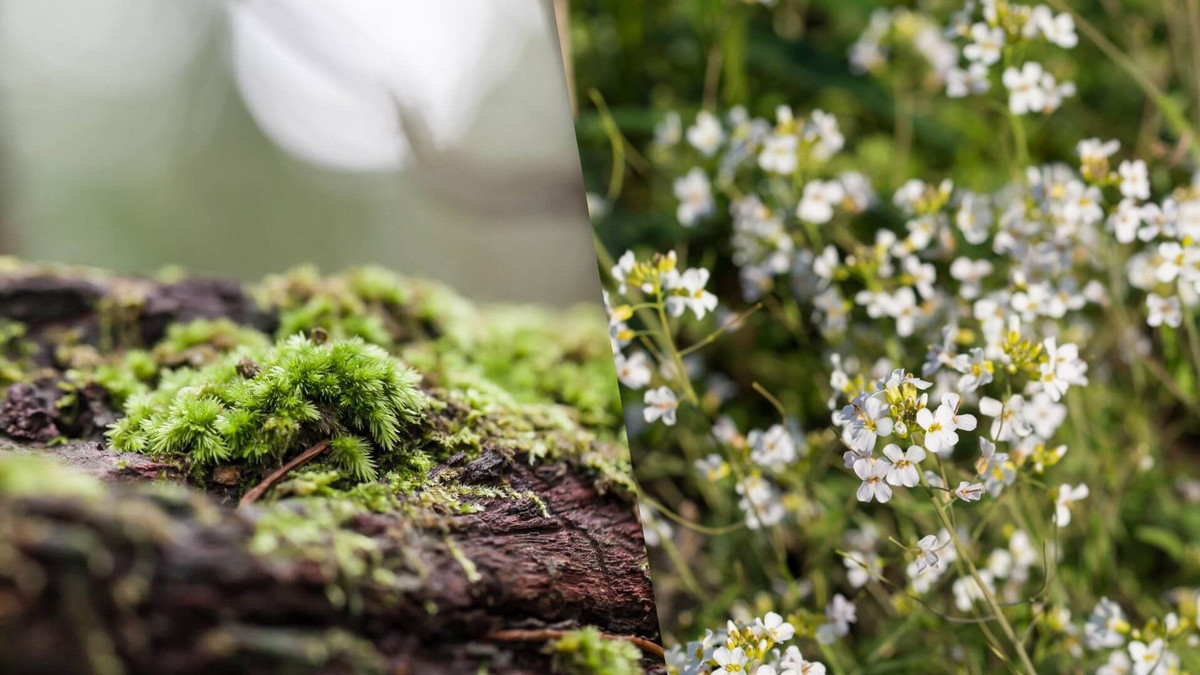
For decades, botanists have puzzled over a fundamental question: how did plants with such different evolutionary histories develop such similar-looking leaves? A new study published in Science Advances is providing answers that could reshape our understanding of plant development.
Researchers comparing moss with Arabidopsis thaliana (thale cress), a common model organism in plant biology, made an astonishing discovery. Despite diverging evolutionarily hundreds of millions of years ago, both plants follow virtually the same developmental rules when growing leaves. This suggests that nature may have found an optimal solution for leaf development early on—and stuck with it.
The implications are profound. If plants with vastly different evolutionary origins rely on identical developmental mechanisms, it points to universal principles governing how leaves form. Rather than each plant species reinventing the wheel, they appear to be using a shared biological blueprint that has proven so effective it's been conserved throughout plant evolution.
This research challenges the assumption that evolutionary distance necessarily means developmental differences. Instead, it suggests that certain developmental pathways are so fundamental and efficient that evolution preserves them across diverse species. Think of it like different architects using the same mathematical principles—the buildings may look different on the outside, but their structural foundations are remarkably similar.
Understanding these universal developmental rules could have practical applications far beyond academic interest. Scientists could potentially manipulate these pathways to improve crop yields, create more resilient plants in the face of climate change, or develop better biofuels. If we understand the core rules governing leaf development, we might be able to optimize them.
The study also raises intriguing questions about evolution itself. Rather than viewing evolution as a constant process of innovation and change, this research suggests that sometimes evolution finds elegant solutions and maintains them. Moss leaves and flowering plant leaves may look different to our eyes, but at the molecular and developmental level, they're following the same playbook—a testament to the power of evolutionary success.
No comments yet. Be the first!