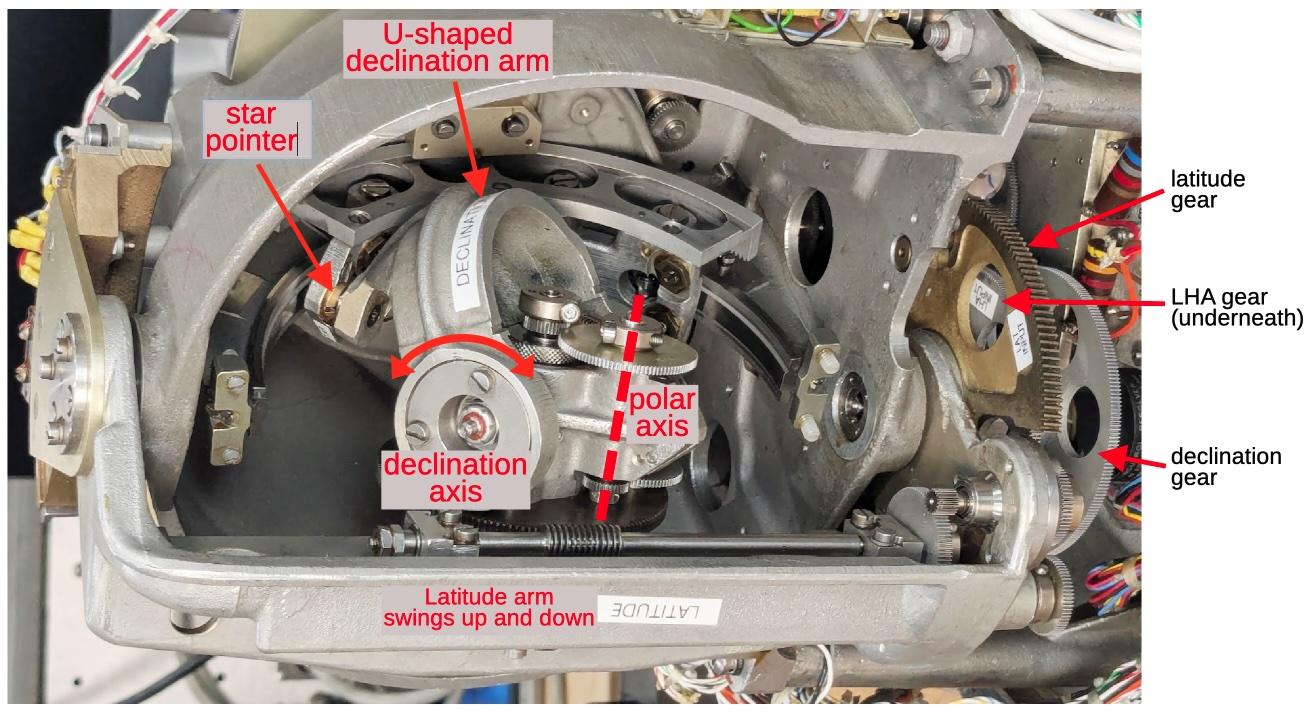
Navigating across vast oceans and continents without modern GPS wasn't just challenging—it was absolutely critical for military operations. During the Cold War era, B-52 Stratofortress bombers needed reliable ways to determine their position, and the solution came in the form of an ingenious electromechanical star tracker that revolutionized aerial navigation.
Before the age of convenient satellite positioning, military aircraft depended heavily on human navigators who manually plotted courses and calculated positions. This labor-intensive process was not only time-consuming but prone to human error—a dangerous liability when flying strategic bombing missions. The arrival of automation technologies promised to change everything, and the star tracker represented a significant leap forward in that revolution.
The concept was elegantly simple yet mechanically sophisticated: by identifying and tracking celestial bodies, the system could determine the aircraft's precise location with remarkable accuracy. The electromechanical computer would locate stars in the night sky, measure their positions relative to known celestial coordinates, and calculate the plane's exact latitude and longitude. This automated process dramatically reduced navigational errors and allowed bombers to reach their targets with unprecedented precision.
What made this system particularly impressive was its reliability in an era before modern electronics. Using a combination of mechanical components, electrical circuits, and optical systems, the star tracker operated independently of ground-based navigation aids like radio beacons—making it ideal for long-range missions over hostile territory where relying on external signals wasn't practical or safe.
The B-52's star tracker exemplifies Cold War-era engineering ingenuity, when military necessity drove innovation in surprising directions. Engineers created solutions that were robust, reliable, and remarkably effective, even by today's standards. While GPS has since made these elegant mechanical systems obsolete, the star tracker remains a fascinating reminder of how humans solved complex navigation challenges before satellites dotted the sky.
This piece of aviation history stands as a testament to human creativity and the remarkable machines that served our military for decades.
No comments yet. Be the first!