When parents receive a diagnosis of trisomy 18 or trisomy 13 during pregnancy, they face one of medicine's most difficult decisions. These genetic conditions, also known as Edwards syndrome and Patau syndrome respectively, are severe chromosomal abnormalities with poor prognosis. But a crucial question remains: does the quality and intensity of medical care differ depending on where a baby is born?
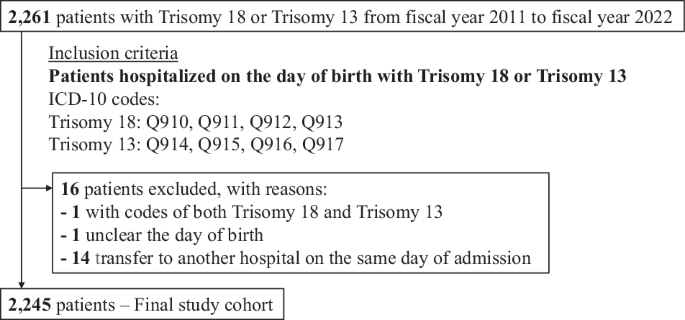
A comprehensive nationwide study conducted across Japan from 2011 to 2022 set out to answer exactly that. Researchers examined medical records from a large inpatient database to understand how interventions and survival rates have evolved over time—and crucially, how they vary across different regions of the country.
**Understanding the Research**
The study took a retrospective approach, analyzing over a decade of data to identify patterns and trends. By examining which medical interventions were performed, how often they occurred, and whether outcomes changed over the years, the research team could paint a picture of how treatment practices have shifted. More importantly, they could see whether a baby's zip code influenced their likelihood of receiving aggressive medical care and surviving to discharge.
**Why This Matters**
For conditions as serious as trisomies 18 and 13, the decisions made in those first critical hours and days of life can be profound. Should doctors pursue all possible interventions—surgeries, intensive care support, mechanical ventilation? Or should the focus shift toward comfort care? These aren't merely clinical questions; they're deeply ethical ones that involve family values, medical expertise, and available resources.
When regional disparities emerge, they suggest that geography—rather than medical evidence—may be influencing these life-and-death decisions. This raises important questions about healthcare equity and whether all families have equal access to the full spectrum of medical options.
**What the Data Reveals**
By analyzing nationwide inpatient data, researchers could identify trends that might not be visible in smaller studies. The longitudinal approach—tracking changes from 2011 through 2022—allowed them to see how medical practice evolved over more than a decade. Did hospitals become more aggressive in their interventions, or more conservative? Did survival rates improve, and if so, was this consistent everywhere?
The regional analysis is particularly illuminating. Hospital systems in different parts of the country may have different resources, different philosophical approaches to neonatal care, and different access to specialized expertise. Understanding these variations is the first step toward ensuring more equitable care.
**Looking Forward**
Research like this serves as a mirror for healthcare systems. It reveals where gaps exist and where practices diverge without clear medical justification. For families facing these devastating diagnoses, knowing that care quality shouldn't depend on geography is important. For policymakers and hospital administrators, these findings provide evidence-based insights into how to standardize and improve care.
The journey from diagnosis to treatment is challenging enough. Adding regional inequality to that burden seems unnecessary—and this research suggests it might be preventable.
No comments yet. Be the first!