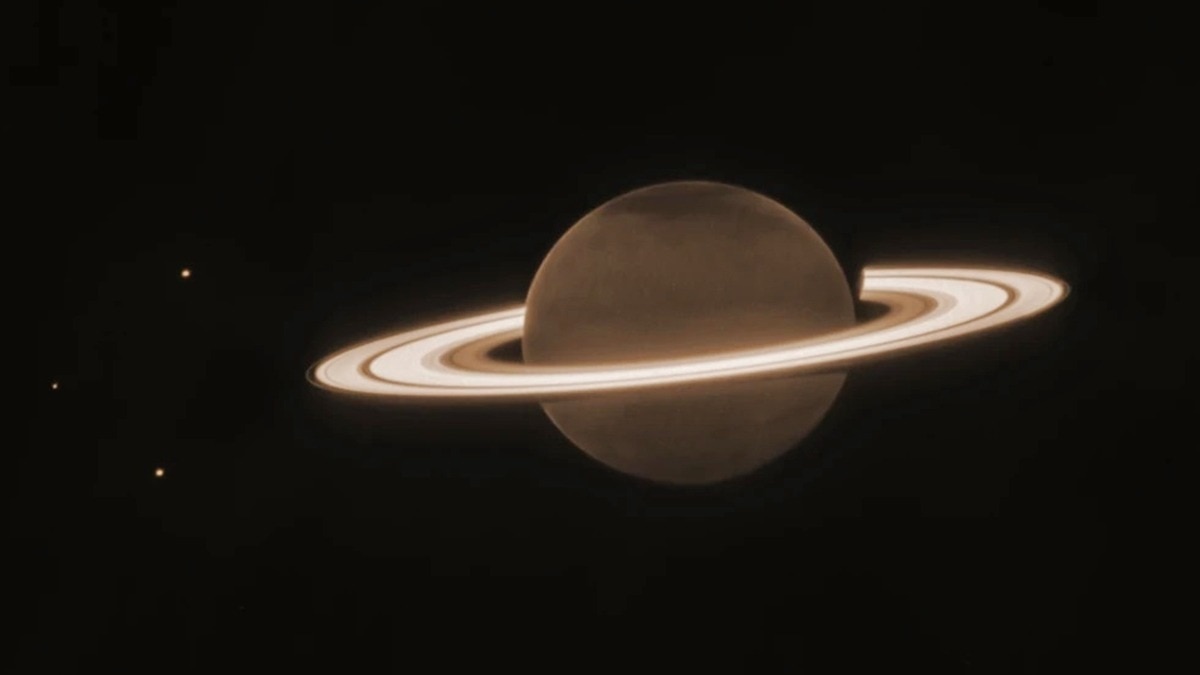
When we think about the planets in our solar system, Saturn has always captured our imagination with its iconic rings. But there's more to this gas giant than just its stunning appearance—it's also home to an absolutely staggering number of moons. And thanks to recent astronomical discoveries, that number just got even more impressive.
Astronomers have officially announced the discovery of 11 new moons orbiting Saturn, according to an official circular released by the Minor Planet Center. This exciting announcement, published as MPEC 2026-F14, brings Saturn's total moon count to an incredible 285. That's right—Saturn now has more moons than any other planet in our solar system.
This discovery is a testament to how our observational technology and astronomical methods continue to improve. As our instruments become more sensitive and our data analysis techniques more sophisticated, we're able to detect smaller and fainter objects that were previously invisible to us. These newly discovered moons around Saturn likely fall into this category—smaller bodies that orbit the gas giant in the outer regions of its system.
Saturn has long been known as a moon-rich world, but reaching 285 moons represents a remarkable milestone in planetary science. Each discovery adds another piece to the puzzle of how planetary systems form and evolve. The moons around Saturn vary greatly in size, composition, and orbital characteristics, creating a fascinating laboratory for understanding planetary dynamics.
What makes these discoveries particularly significant is what they tell us about Saturn's gravitational influence and the complexity of its system. The sheer number of moons suggests a dynamic environment where objects have been captured over billions of years, or where moonlets have formed from rings and debris. Some of Saturn's moons are large and geologically interesting—like Titan, with its thick atmosphere, or Enceladus, with its subsurface ocean. But many others are small, icy bodies that we're only now beginning to catalog properly.
The Minor Planet Center, which serves as the official repository for discoveries of small bodies in our solar system, continues to play a crucial role in cataloging these finds. Each new discovery requires careful observation, verification, and orbital determination before it can be officially recognized. This meticulous process ensures that we have accurate information about these celestial bodies.
For space enthusiasts and astronomers alike, this discovery is a reminder that our solar system still holds many secrets. Even around planets we've studied for centuries, new wonders await discovery. As technology continues to advance, we can expect even more discoveries in the years to come.
Saturn's status as the moon king of our solar system isn't just a fun fact—it reflects the planet's massive size, its powerful gravity, and billions of years of cosmic history. Each of those 285 moons tells part of the story of how our solar system came to be. And who knows? With continued observation and improved technology, Saturn might have even more moons waiting to be discovered.
No comments yet. Be the first!