Imagine being able to observe events that occurred over a billion years ago—not through traditional telescopes, but through invisible particles that have traveled across the cosmos since the dawn of time. This isn't science fiction; it's the cutting edge of modern astrophysics.
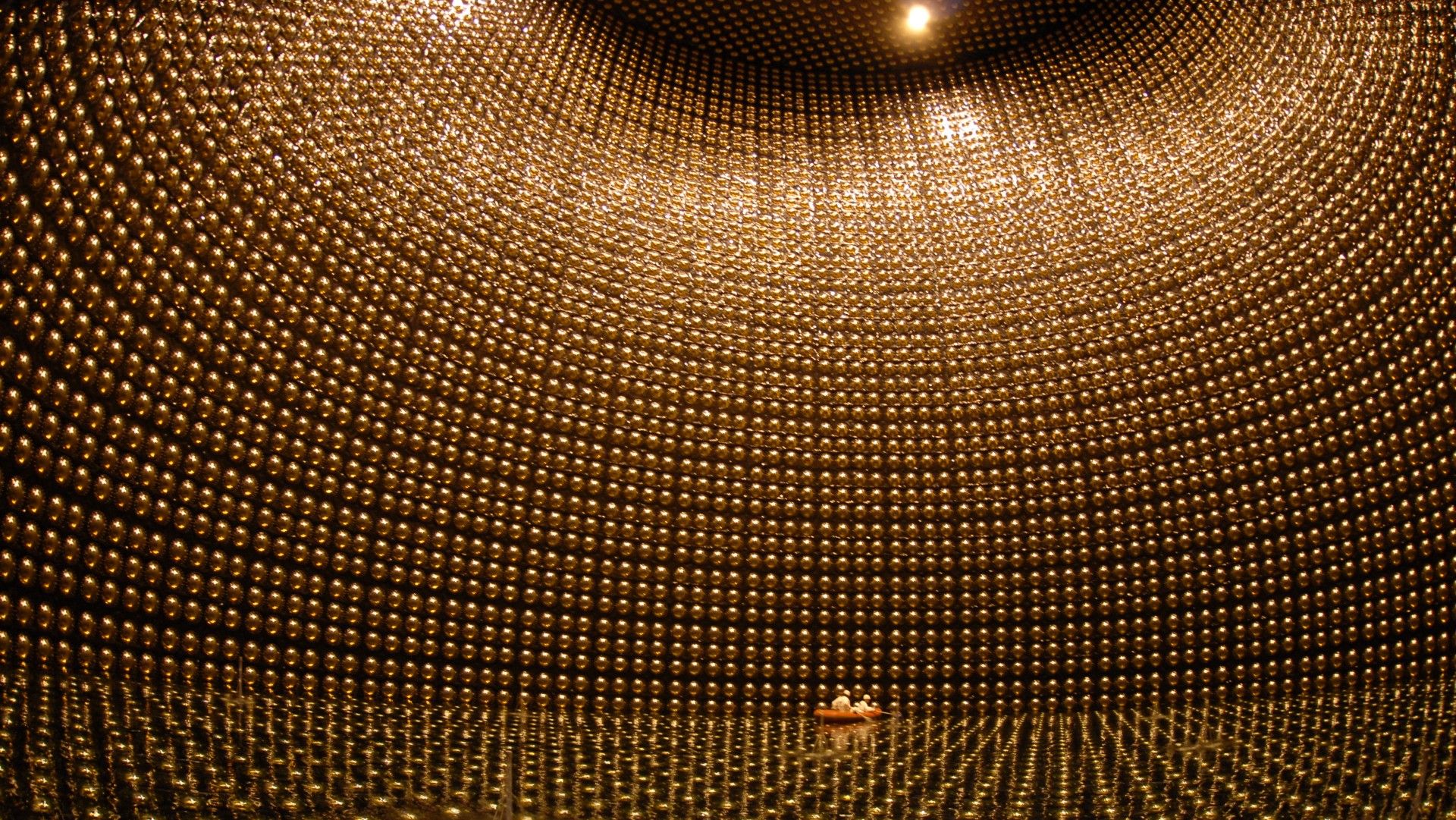
Deep underground, shielded from cosmic rays and other interference, scientists are constructing sophisticated detectors designed to catch some of the universe's most elusive messengers: neutrinos from supernova explosions that occurred when the universe was young. These ghostly particles offer a unique window into stellar death and the early cosmos in ways that traditional astronomy simply cannot match.
**Why Go Underground?**
You might wonder why these telescopes need to be buried beneath the Earth. The answer is elegant: Earth itself serves as a shield. Our planet protects these ultra-sensitive detectors from constant bombardment by cosmic rays that would otherwise overwhelm their delicate instruments. By going deep underground, scientists can filter out the noise and detect the faintest cosmic signals—particles that interact so weakly with matter that trillions pass through our bodies every second without us noticing.
**The Supernova Connection**
When massive stars reach the end of their lives, they don't fade quietly into the night. Instead, they explode in spectacular supernovae, releasing enormous amounts of energy. Importantly, these explosions produce abundant neutrinos—particles so elusive they were once called "ghostly." Each detected neutrino from an ancient supernova carries information about what was happening during the early universe, encoding clues about stellar evolution and the chemical composition of the cosmos billions of years ago.
By studying these neutrino emissions, researchers can piece together a more complete picture of stellar death and learn how the first generations of stars shaped the universe we observe today.
**A New Era of Multi-Messenger Astronomy**
This research represents a fundamental shift in how we study the cosmos. Traditional astronomy relies on light—visible, infrared, ultraviolet, and radio waves. But light can be blocked by dust and absorbed by intervening material. Neutrinos, by contrast, travel almost unimpeded across billions of light-years, carrying pristine information about their sources.
When combined with observations from traditional telescopes and gravitational wave detectors, neutrino astronomy creates a richer, more complete picture of cosmic events. Each messenger tells a different part of the story, and together they provide insights impossible to gain from any single observational method.
**Looking Forward**
As these underground detectors become more sensitive, scientists anticipate detecting neutrinos from supernovae that exploded in the universe's earliest epochs. These observations could fundamentally reshape our understanding of how stars formed, evolved, and enriched the cosmos with heavy elements necessary for planets and life.
The universe's ancient ghosts are waiting to be heard. Deep underground, patient detectors are listening.
No comments yet. Be the first!