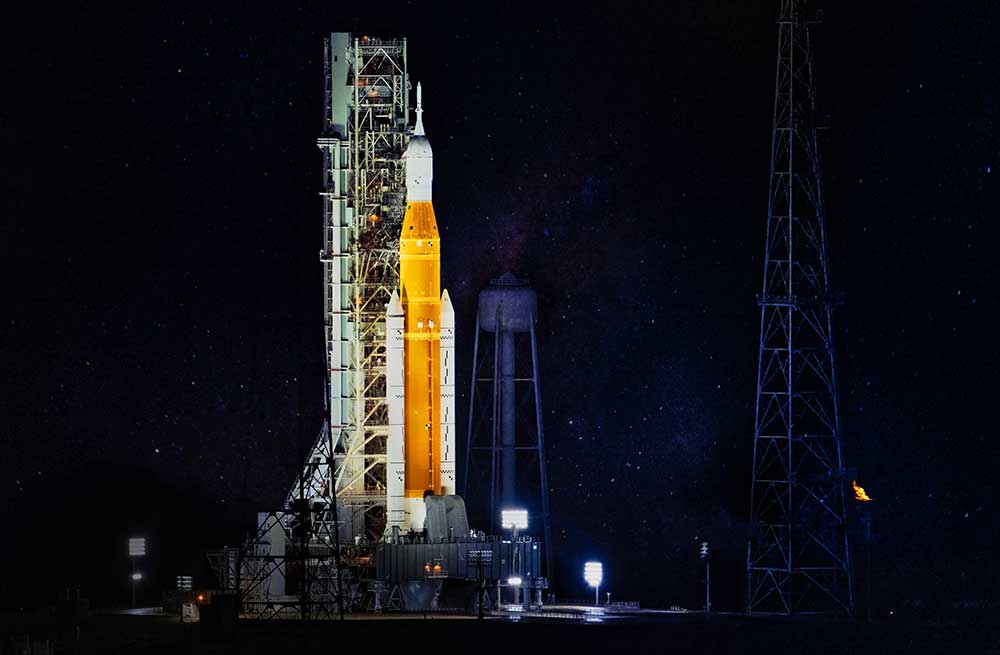
The countdown is officially on. On Thursday, NASA took a significant step forward in its Artemis program by beginning the journey to return its towering Space Launch System (SLS) rocket and Orion spacecraft to the launch pad at Kennedy Space Center in Florida. This maneuver marks a pivotal moment in humanity's quest to return to the Moon.
The operation, which began with Artemis engineers carefully orchestrating the move, is no small feat. The process of transporting such a massive and delicate spacecraft can take up to 12 hours to complete safely. Every movement must be calculated with precision to ensure that the rocket—one of the most powerful ever built—reaches its destination without incident.
This return to the pad comes after NASA completed necessary repairs and improvements to the vehicle. The SLS rocket, standing at an impressive height and packed with cutting-edge technology, has undergone rigorous evaluation and maintenance to ensure it's ready for its crucial mission. The Orion spacecraft, designed to carry astronauts on deep space missions, is equally vital to the success of this endeavor.
What makes this moment especially exciting is the targeted launch date of April 1. While space missions are inherently unpredictable and dates can shift, this timeline represents NASA's commitment to moving forward with the Artemis program—an ambitious initiative aimed at establishing sustainable lunar exploration and paving the way for future Mars missions.
The SLS and Orion combination represents the pinnacle of modern rocket engineering. The SLS is specifically designed to be powerful enough to break free from Earth's gravity and propel the Orion spacecraft beyond low Earth orbit, into the vast expanse of space toward the Moon. This is no routine launch; it's a testament to decades of NASA engineering, innovation, and determination.
For space enthusiasts and those following humanity's space exploration journey, this news is thrilling. The return of the rocket to the pad signals that we're moving from the preparation phase into the execution phase of one of the most ambitious space missions planned for the decade. Every step forward brings us closer to new discoveries and achievements in space exploration.
The Artemis program itself is named after the twin sister of Apollo in Greek mythology, a fitting tribute as NASA works to build on the legacy of the Apollo missions. This new generation of lunar exploration promises to be more inclusive, more advanced, and more ambitious than ever before.
As the SLS makes its way back to the launch pad, engineers will continue their meticulous preparations. Every system will be checked, rechecked, and verified to ensure optimal performance. The months leading up to April 1 will be critical as teams work around the clock to prepare for what could be one of the most significant moments in modern space exploration.
Stay tuned as we approach this historic launch. The journey to the Moon is about to begin.
No comments yet. Be the first!