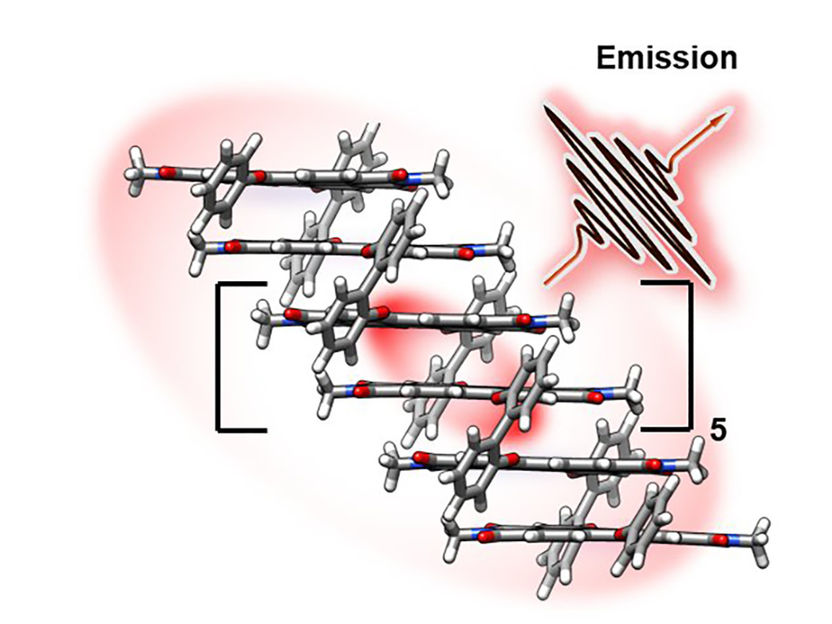
When it comes to molecules doing their job, size truly matters. Think about proteins and DNA – they need to fold precisely and reach a certain minimum length to actually work. The same principle applies to dyes and their light-emitting capabilities, but researchers have just discovered something remarkable: by stacking dyes in the right way, you can unlock a sudden surge in luminosity that far exceeds what you'd expect.
This discovery represents a significant leap forward in materials science. Scientists have developed a new method for arranging dye molecules in carefully controlled stacks, and the results are nothing short of impressive. When these molecules are positioned optimally, their ability to emit light increases dramatically – a phenomenon that opens up exciting possibilities for numerous applications.
But here's what makes this finding truly special: it's not just about brute force. The key lies in understanding the fundamental rules governing how dyes interact when layered together. Rather than assuming that bigger stacks always mean brighter results, researchers have identified specific configurations and arrangements that produce this impressive luminosity surge. It's a elegant solution that shows how deep knowledge of molecular behavior can lead to breakthrough innovations.
The implications of this work are far-reaching. In medical diagnostics and imaging, brighter dyes mean clearer pictures and more accurate results. For display technologies, this could lead to more vibrant screens with better energy efficiency. Researchers working in biotechnology, pharmaceuticals, and materials science are already exploring how to leverage this new understanding.
What's particularly exciting is that this method appears to work based on fundamental principles of molecular physics and chemistry. By respecting the natural rules of how dyes stack and interact, scientists have found a way to enhance their properties without resorting to complex chemical modifications. This suggests the approach could be broadly applicable across different types of dyes and materials.
The research also highlights an important theme in modern science: sometimes the most powerful breakthroughs come from understanding the rules that nature has already written. Rather than fighting against molecular behavior, this new stacking method works with it, organizing molecules in ways that amplify their natural light-emitting properties.
As this work develops further, we can expect to see practical applications emerging in various fields. The ability to create brighter, more efficient dyes with a relatively straightforward stacking method could accelerate innovation across multiple industries. Researchers and engineers are now asking: what else can we achieve by optimizing molecular arrangements in this way?
This discovery reminds us why fundamental research in chemistry and materials science matters so much. A clever insight into how molecules behave can spark innovations that ripple across technology and medicine. The sudden surge in luminosity achieved through this new stacking method might just be the beginning of something even bigger.
No comments yet. Be the first!