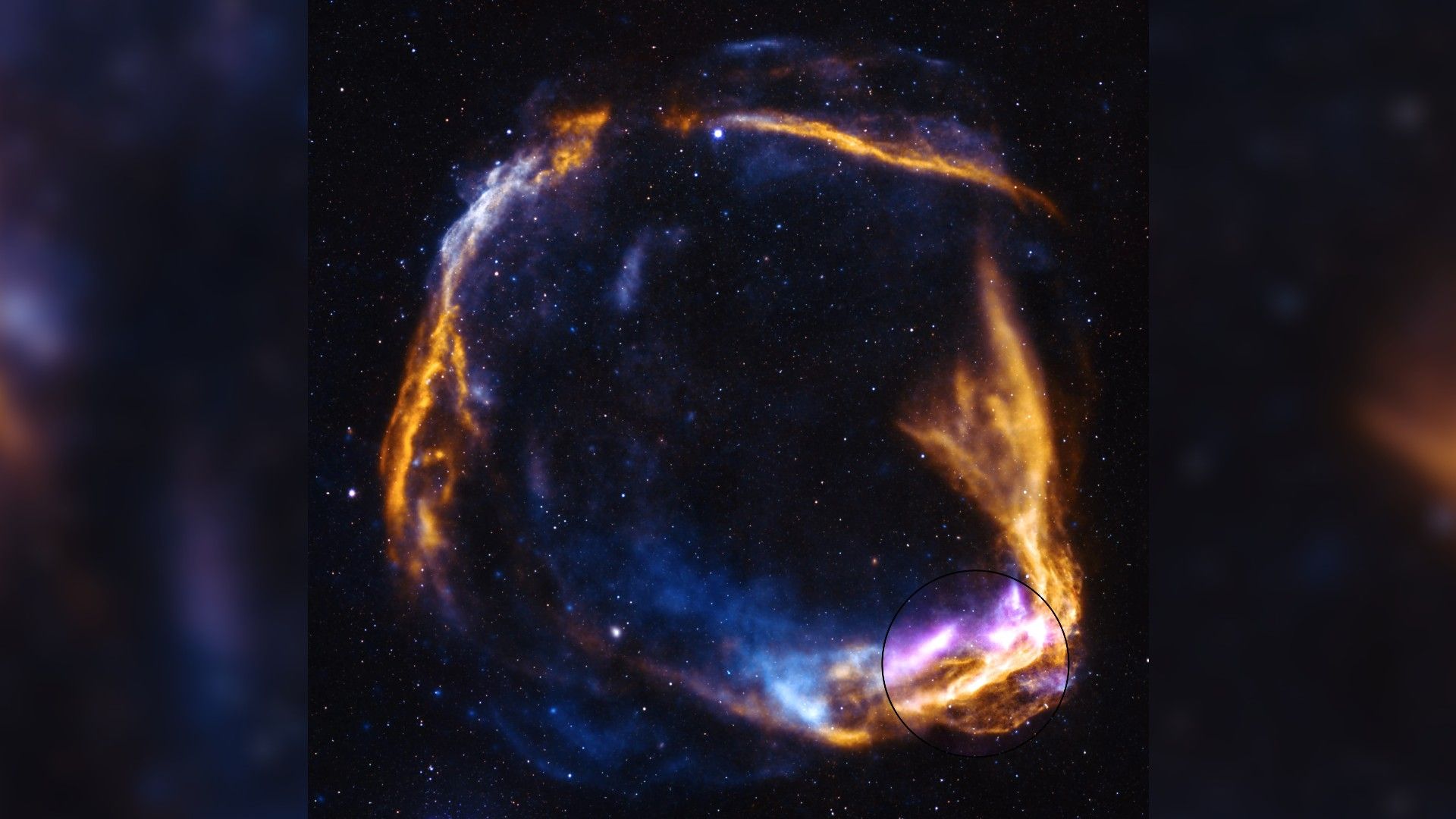
When Chinese astronomers gazed up at the night sky in 185 AD, they witnessed something extraordinary: a "guest star" so bright it was visible even during daylight hours. What they were observing was a supernova explosion—the catastrophic death of a massive star—located about 8,000 light-years away in the constellation Cassiopeia. Now, nearly 2,000 years later, NASA's X-ray telescope has captured the most detailed portrait yet of what remains of that ancient cosmic explosion.
The supernova remnant, known as SN 185, has fascinated astronomers for decades. It's not only the oldest supernova documented by human observers, but it's also a time capsule of stellar destruction. When a star goes supernova, it expels its outer layers at tremendous speeds, creating an expanding shell of debris and shocked gas that can take centuries to fade away. SN 185's remnant has been expanding for nearly two millennia, and what we see today is the glowing echo of that violent event.
What makes this latest observation so significant is the unprecedented level of detail NASA's X-ray telescope has managed to capture. Unlike visible light, X-rays can penetrate cosmic dust clouds and reveal the hot, energetic processes happening within the remnant. The new portrait shows intricate filaments, bright knots, and complex structures that were previously hidden from view. These features tell the story of how the exploded star's material is interacting with the surrounding space—a tale written in superheated gas and radiation.
For astronomers, images like these are invaluable. Studying supernova remnants helps us understand the explosive mechanisms that tear stars apart and how these events influence the galaxies around them. When a star goes supernova, it doesn't just vanish—it enriches the surrounding space with heavy elements forged in the star's core. These elements eventually become part of new stars, planets, and potentially, life itself. In a very real sense, the supernova remnant SN 185 is a birthplace for future cosmic generations.
The Chinese observers who first documented this event couldn't have imagined that their careful records would one day be matched with images from sophisticated space telescopes orbiting Earth. Yet here we are, able to peer back through time and space to witness the consequences of an explosion that occurred 8,000 years before light from it even reached our planet.
As technology advances, we'll undoubtedly learn even more from SN 185 and other supernova remnants. Each new observation adds another piece to the puzzle of how the universe recycles stellar material and creates the conditions for new worlds. The oldest supernova on record is still teaching us—and that's what makes this discovery so thrilling.
No comments yet. Be the first!