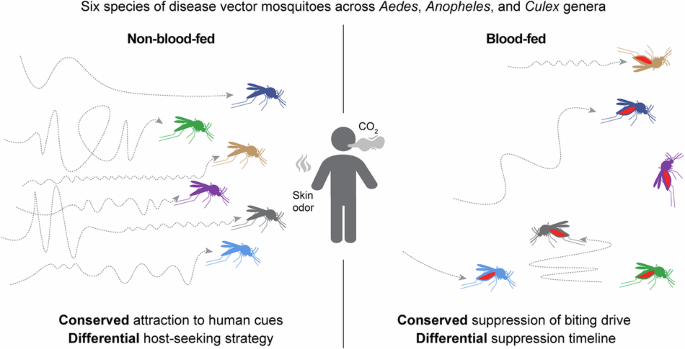
When we think about mosquitoes, we often imagine them as a uniform threat—all equally dangerous and driven by the same hunger for blood. But new research reveals a far more complex reality: mosquitoes exhibit significant behavioral heterogeneity, meaning individuals vary substantially in how they seek hosts and respond to feeding.
This discovery is transforming our understanding of disease transmission and vector control. The U.S. Centers for Disease Control and Prevention, working with the Department of Health and Human Services, has emphasized these behavioral differences as critical factors in the National Public Health Strategy to Prevent and Control Vector-Borne Diseases.
So what exactly changes between mosquitoes? The research shows variation in host-seeking behavior—some mosquitoes are aggressive hunters while others are more passive. Even more intriguingly, post-feeding suppression (the period after a mosquito feeds) differs dramatically among individuals. Some mosquitoes actively seek another host immediately after feeding, while others rest and suppress their hunting instincts for extended periods.
Why does this matter? These behavioral patterns directly influence disease transmission rates. A mosquito that aggressively seeks multiple hosts in rapid succession poses a far greater epidemiological threat than one that rests between feeds. Understanding which populations of mosquitoes exhibit which behaviors helps public health officials predict outbreak patterns and design targeted interventions.
This heterogeneity also explains why one-size-fits-all mosquito control approaches often underperform. Traditional strategies might effectively suppress passive feeders while missing aggressive hunters entirely. By recognizing behavioral diversity, researchers can develop more sophisticated, population-specific control measures.
The implications extend beyond basic science. This knowledge supports the development of better surveillance systems, more effective pesticide deployment strategies, and innovative biological control methods. As vector-borne diseases like dengue, Zika, and West Nile virus continue threatening public health globally, understanding mosquito behavior isn't just academically interesting—it's essential for saving lives and preventing epidemics.
No comments yet. Be the first!