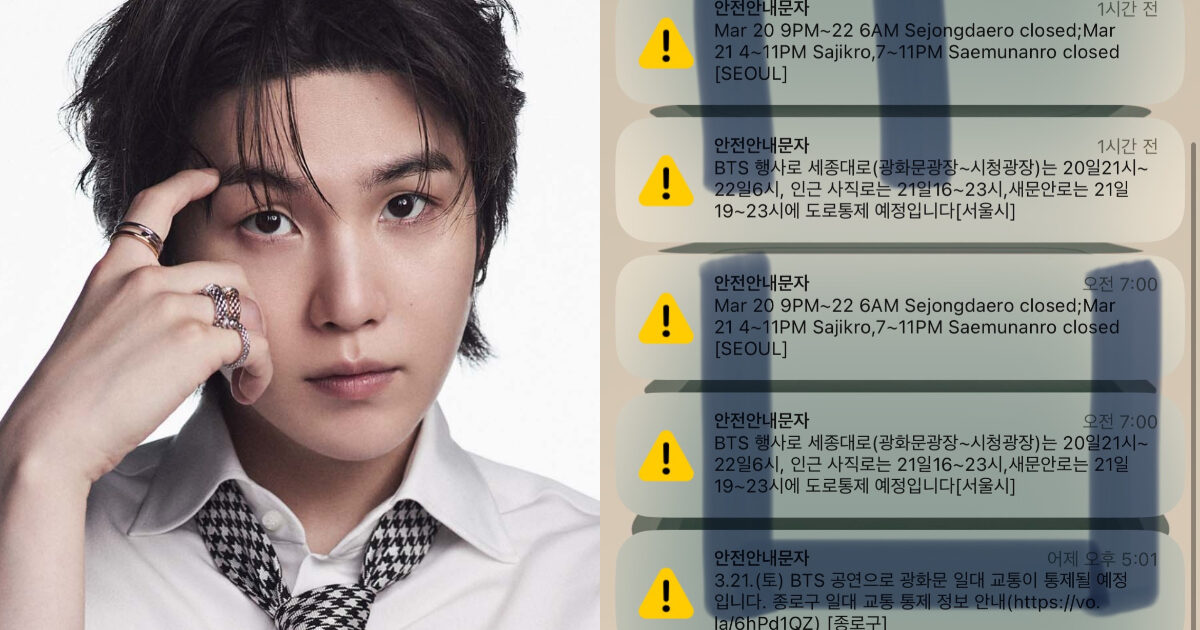
Picture this: You're going about your morning on March 20, 2026, when your phone suddenly buzzes with an urgent emergency alert. Then it buzzes again. And again. For many South Koreans, what was supposed to be a groundbreaking safety initiative quickly turned into an annoying digital headache.
Ahead of BTS's highly anticipated performance at Gwanghwamun Square, the Seoul Metropolitan Government decided to make history by issuing emergency alerts in English for the first time. While the intention was noble—ensuring that international visitors and residents would be informed of any emergencies—the execution left much to be desired.
On that fateful morning, the city sent out an emergency alert in Korean, followed by what many residents experienced as an incessant barrage of notifications. The repetitive nature of these messages quickly sparked outrage across the country, with South Koreans taking to social media to express their frustration. What was meant to enhance public safety became a prime example of how well-intentioned policies can sometimes miss the mark.
The core issue wasn't necessarily the introduction of English-language alerts themselves. In fact, for a country that attracts millions of international visitors annually and hosts major global events, having multilingual emergency communication systems makes perfect sense. The problem was in how the system was implemented and deployed.
Many users reported receiving multiple duplicate alerts, unclear messaging about why alerts were being sent so frequently, and a general sense that the system lacked proper coordination. For residents already fatigued by regular emergency alerts—which are fairly common in South Korea for various reasons—this surge felt like overkill.
This incident highlights an important lesson for government agencies worldwide: when rolling out new communication systems, it's crucial to test thoroughly and consider the user experience, not just the technical capability. A notification system is only effective if people actually trust it and don't immediately mute or ignore alerts.
The controversy also raises interesting questions about how to balance multilingual accessibility with alert fatigue. How many times should the same message be sent? Should there be different alert systems for residents versus visitors? These are the questions Seoul's government will likely be wrestling with as they review what went wrong.
Despite the alert fiasco, BTS's Gwanghwamun Square performance proceeded as planned, and hopefully, it was worth all the notifications. As for Seoul's emergency alert system, this experience will likely lead to significant improvements in how and when multilingual alerts are deployed in the future.
For now, many residents are probably checking their notification settings and wondering if they'll ever look at an emergency alert the same way again.
No comments yet. Be the first!