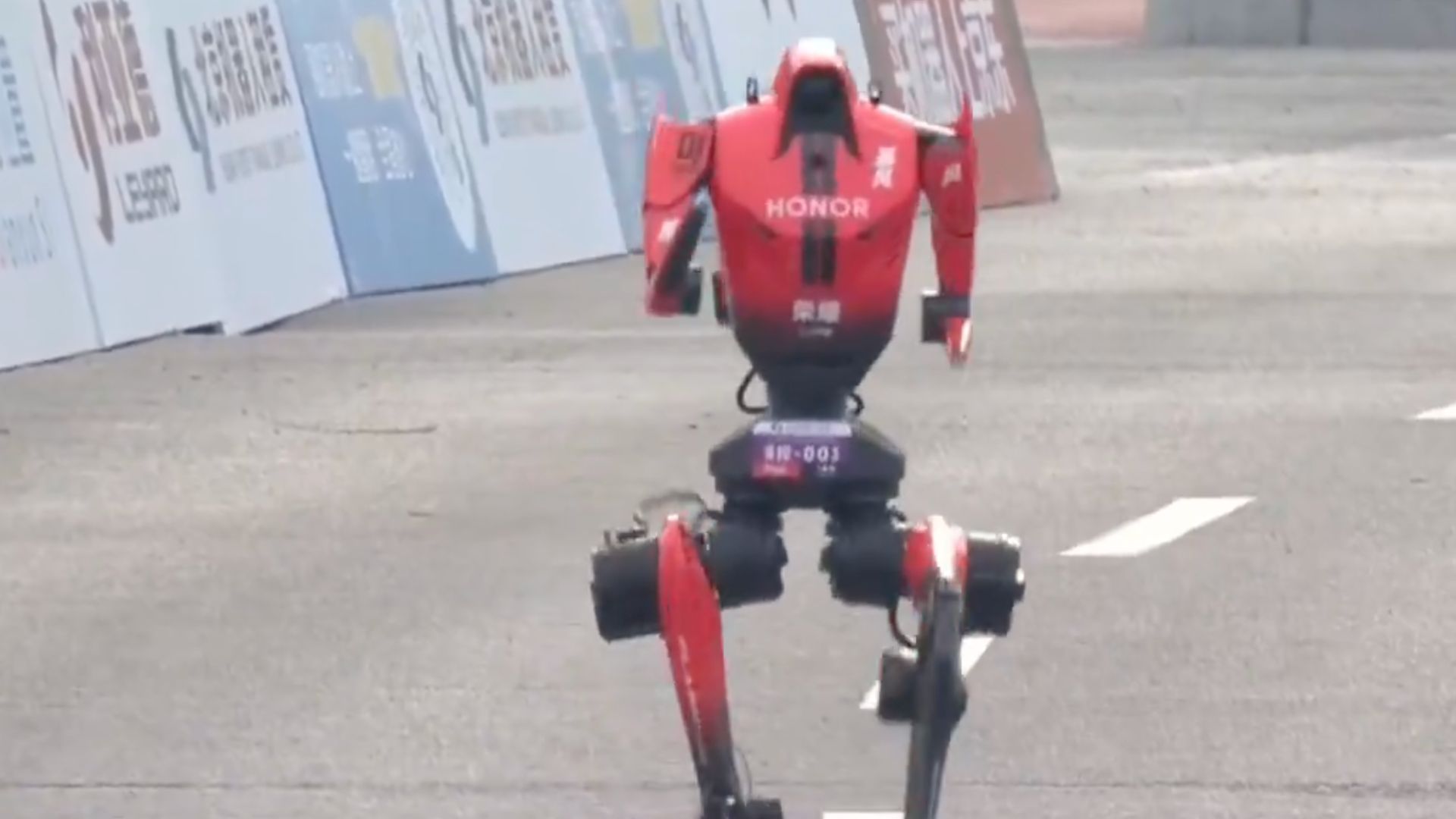
The future of athletic competition just arrived—and it's robotic. On Sunday, April 19, Beijing played host to the second annual Robot World Humanoid Robot Games half-marathon, and the results left spectators in awe. Honor's humanoid runner, aptly named "Lightning," crossed the finish line in an astounding 50 minutes and 26 seconds, officially surpassing the human world record for the half-marathon distance.
For context, the current human half-marathon world record stands at 58 minutes and 23 seconds, set by Zersenay Tadese in 2010. Lightning's time obliterates this benchmark by nearly eight minutes—a gap so significant that it underscores just how far robotics technology has advanced.
What makes this achievement particularly noteworthy is what it represents. Humanoid robots are engineered to replicate human movement and form, making them fundamentally different from specialized athletic machines designed purely for speed. Lightning didn't just run; it ran with human-like biomechanics, facing similar gravitational and physical constraints.
The Robot World Humanoid Robot Games itself is a fascinating concept, designed to push the boundaries of what artificial intelligence and mechanical engineering can achieve. By pitting humanoid robots against traditional benchmarks—in this case, human athletic records—organizers are essentially asking: How close can we get to human capability, and how far beyond it can we go?
This Beijing event marks a watershed moment in the relationship between humans and machines. While some may view this record-breaking run with concern, others see it as a testament to human ingenuity. After all, humans created Lightning. We designed the algorithms, engineered the joints, and programmed the stride patterns that allow it to move with such efficiency.
As robotics continue to evolve at breakneck speed, we'll likely see humanoid robots breaking more human records across various disciplines. The question isn't whether they can—they already have. The real question is: what happens next?
No comments yet. Be the first!