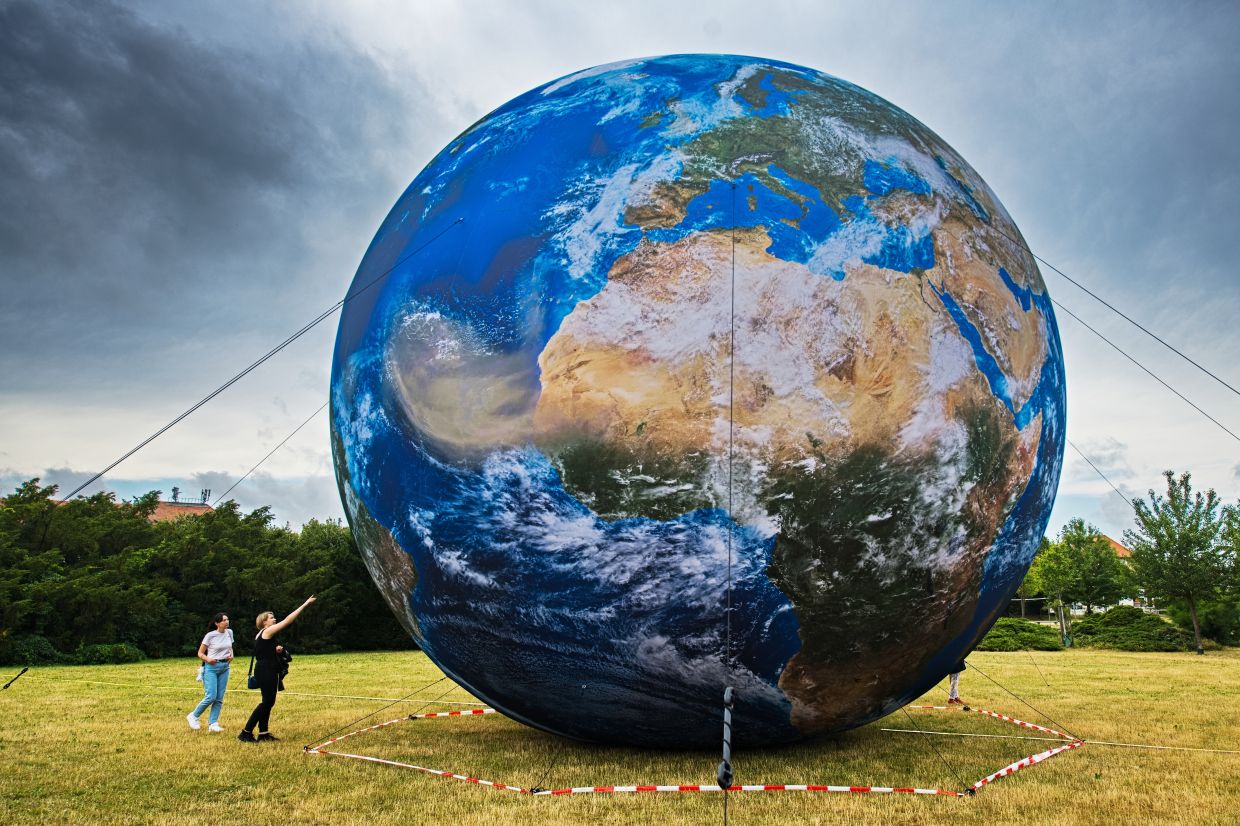
We often hear about climate change affecting our weather patterns, sea levels, and ecosystems, but here's something you probably never expected: it might actually be making days longer. According to recent research, Earth's rotation has slowed significantly in recent decades—more dramatically than at almost any other time in millions of years. This finding adds yet another surprising way that climate change is reshaping our planet.
At first glance, the connection between global warming and Earth's rotation might seem far-fetched. How could rising temperatures affect something as fundamental as how fast our planet spins? But as researchers have discovered, the relationship is real, and it's rooted in physics.
The key to understanding this phenomenon lies in the distribution of water and ice on our planet. Climate change has triggered massive shifts in how mass is distributed across Earth's surface. As glaciers melt and ice sheets shrink, enormous amounts of water move from land to the oceans. This redistribution of mass acts like a figure skater extending their arms while spinning—it slows the rotation.
This isn't the first time scientists have noticed variations in Earth's rotation. Throughout history, our planet's spin has fluctuated due to various natural causes, including changes in ocean currents, atmospheric conditions, and the movement of molten material within Earth's core. However, what makes current observations so significant is the rate and scale of the slowdown we're witnessing right now.
The implications of this discovery extend beyond mere curiosity. While we won't suddenly notice that our days feel noticeably longer in our daily lives, these subtle changes can accumulate and have consequences for precise timekeeping systems, satellite operations, and our understanding of planetary dynamics. Scientists use atomic clocks to measure these tiny variations in Earth's rotation, and the data they're collecting paints a clear picture of our changing planet.
What's particularly striking about this research is how it demonstrates the interconnectedness of Earth's systems. Climate change isn't confined to the atmosphere or oceans—its effects ripple through every aspect of our planet's physical behavior, down to the very speed at which it rotates.
This discovery serves as yet another wake-up call about the far-reaching consequences of climate change. While melting ice caps and rising sea levels dominate the conversation, this research reminds us that the effects of global warming are profound and sometimes unexpected. The planet is responding to rapid human-caused climate change in ways that permeate nearly every system—from the biosphere to the fundamental mechanics of Earth's rotation.
As we continue to study these effects, one thing becomes increasingly clear: addressing climate change isn't just about protecting our environment for future generations. It's about preserving the very mechanics of our world. Whether it's preventing glacial melt or maintaining Earth's natural rhythms, the stakes of climate action have never been higher.
No comments yet. Be the first!