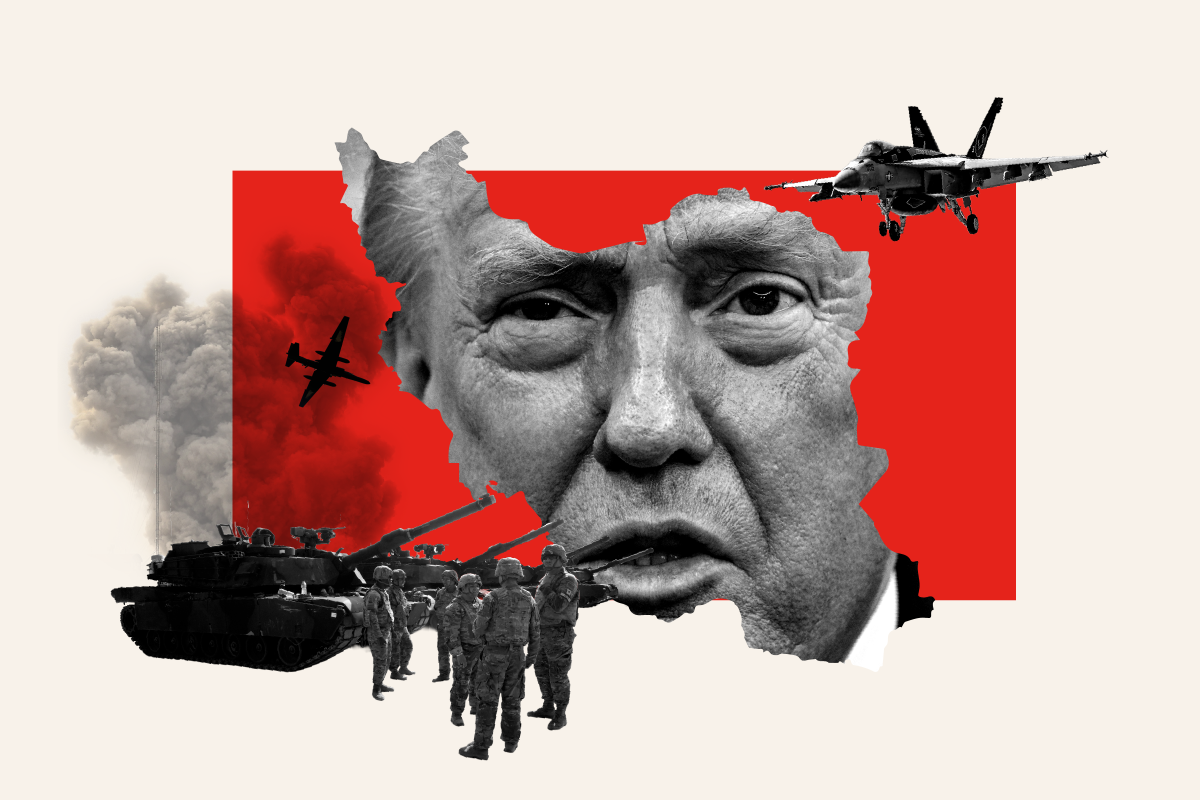
The mixed signals coming from Washington paint a confusing picture: on one hand, President Donald Trump has indicated openness to negotiations aimed at resolving tensions with Iran. On the other, thousands of U.S. military personnel are being deployed to the Middle East, and additional warships are en route to the region. This apparent contradiction raises a critical question: Is the Trump administration preparing for conflict while maintaining diplomatic cover?
The troop and naval deployments suggest something significant is brewing. These aren't routine rotations—they represent a substantial military buildup that signals serious contingency planning. Military analysts are watching closely, recognizing that such deployments typically precede either intensive negotiations backed by military pressure or preparation for direct conflict.
But here's where the calculus gets complicated. If negotiations fail and military options are actually pursued, the costs could be staggering. The Middle East has proven to be a region where military interventions rarely go according to plan. Previous conflicts in Iraq and Afghanistan have demonstrated the unpredictability and expense of sustained military operations in the region.
When examining potential military scenarios against Iran, defense experts point out that none of the options available are cheap—either in financial terms or in human cost. Iran's geography, military capabilities, and strategic positioning make any military action extraordinarily complex. Unlike smaller regional actors, Iran has the capacity to strike back in multiple ways, potentially destabilizing the broader region and affecting global oil markets.
The financial burden alone would be substantial. Sustained military operations require continuous funding for fuel, ammunition, maintenance, and personnel support. Add to that the potential for civilian casualties, military losses, and long-term reconstruction costs, and the numbers become hard to justify without overwhelming strategic necessity.
Beyond the direct military costs, there are broader economic implications. A major conflict in the Middle East could disrupt global oil supplies, sending energy prices soaring and potentially triggering an economic downturn. International relationships could fracture, with allies and adversaries reassessing their positions based on the conflict's trajectory.
This reality seems to inform the administration's dual approach: maintaining military readiness while signaling openness to negotiation. It's a classic show of strength while keeping dialogue open—a tactic that can work if both sides are genuinely interested in avoiding conflict.
The fundamental issue is whether the current military deployments represent a genuine deterrent designed to strengthen negotiating positions, or whether they indicate preparation for conflict that the administration believes may become unavoidable. The answer likely determines the region's immediate future.
What's clear is that the stakes are extraordinarily high. Any decision-makers considering military action must weigh these costs carefully against the alternatives. In a region already fractured by conflict, the consequences of miscalculation could echo far beyond the Middle East itself.
No comments yet. Be the first!