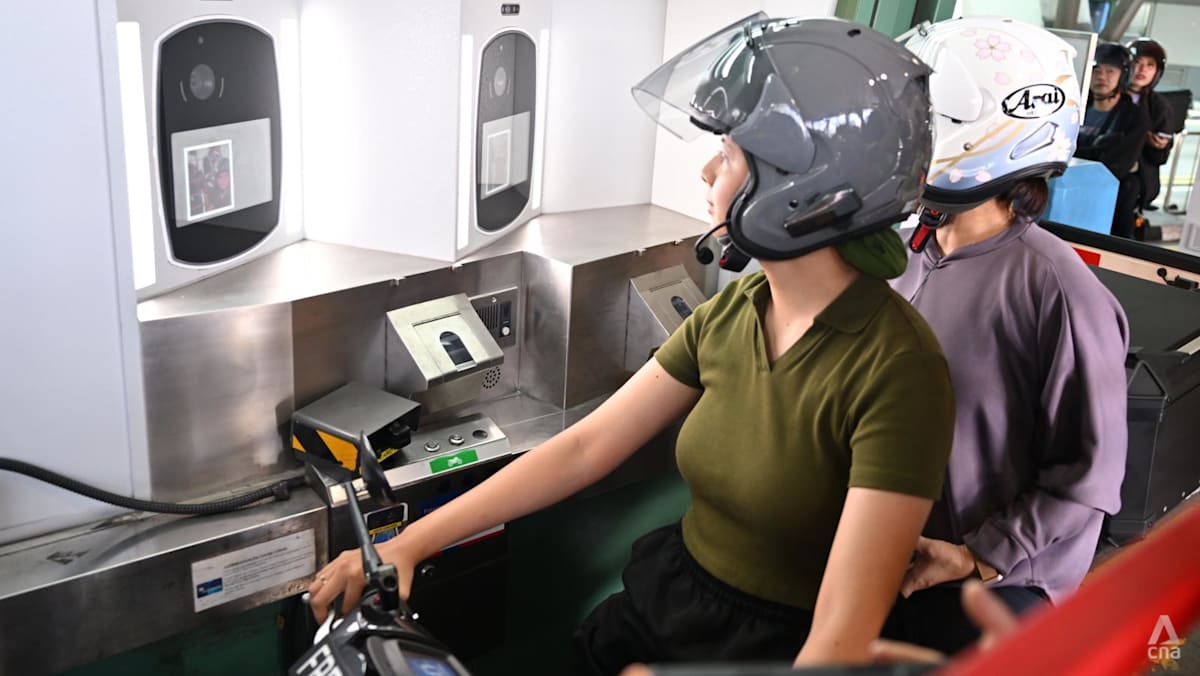
Remember when crossing a border meant inking your fingers and waiting in queues? Those days are rapidly becoming history in Singapore. The Immigration and Checkpoints Authority (ICA) has announced plans to deploy facial recognition technology at all automated motorcycle lanes across the nation's land checkpoints, marking a significant leap in border control modernization.
The initiative comes after successful trials of the system, which demonstrated promising results in streamlining the clearance process for motorcycle commuters. Unlike traditional methods that rely on fingerprint scanning, this new approach prioritizes facial imagery as the primary biometric identifier—a shift that could redefine the checkpoint experience for thousands of daily riders.
**Why Make the Switch?**
The move toward facial recognition isn't just about keeping up with technology trends. This upgrade offers real, practical benefits for both authorities and travelers. Facial recognition is faster, more hygienic (no fingers involved), and significantly reduces contact between officers and riders—a factor that gained particular importance in recent years. The system can process riders more quickly, reducing congestion during peak hours and making border crossings more efficient.
For the ICA, this technology enhances security and accuracy. Facial recognition systems can verify identities with remarkable precision and can be integrated with databases to flag individuals requiring additional screening. It's a win-win: smoother journeys for compliant travelers and stronger security measures for the nation.
**What This Means for Motorcyclists**
If you're a regular motorcycle commuter crossing Singapore's land checkpoints, expect a smoother journey ahead. The automated motorcycle lanes equipped with facial recognition will allow for faster processing times. The process is straightforward: riders simply present themselves to the camera, and the system verifies their identity within seconds. No fingerprinting required, no messy ink, no delays.
The rollout of this technology across all automated motorcycle lanes—rather than just a few pilot locations—signals the ICA's confidence in the system's reliability and effectiveness. This comprehensive deployment also demonstrates Singapore's commitment to being a forward-thinking nation in border management.
**The Bigger Picture**
Singapore's adoption of facial recognition at land checkpoints places it alongside other technologically advanced nations investing in biometric border systems. The move reflects a global trend toward automated, efficient, and secure border control mechanisms. As international travel and cross-border movement continue to evolve, such innovations become increasingly important.
This development also hints at potential future applications. If facial recognition proves successful for motorcyclists, we might see it extended to other vehicle types and checkpoint locations down the line—a possibility that could transform border crossing experiences across the entire island.
**Looking Ahead**
The rollout of facial recognition at Singapore's land checkpoints represents more than just a technological upgrade; it's a commitment to making border crossings faster, safer, and more convenient. For the millions of motorcycle commuters and travelers using these checkpoints annually, the new system promises a smoother journey forward—literally.
As Singapore continues to embrace smart border solutions, one thing is clear: the future of checkpoint processing has arrived, and it's all about recognizing you at a glance.
No comments yet. Be the first!