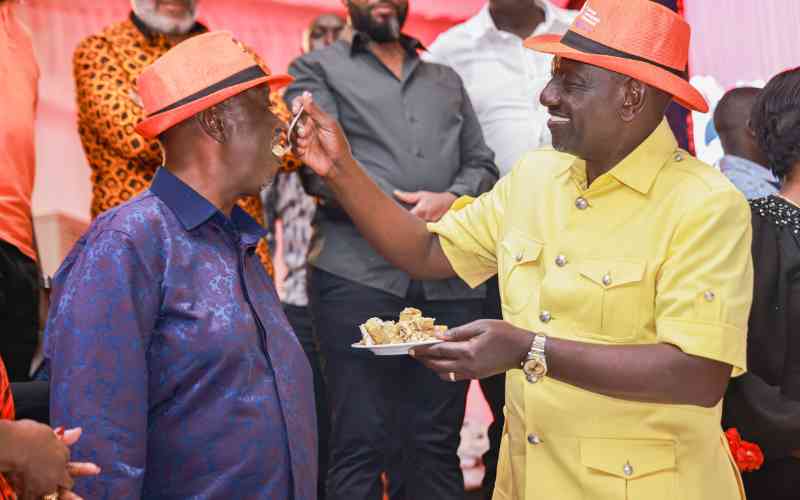
Kenyan politics just took an unexpected turn. On Friday, a faction of the Orange Democratic Movement (ODM), now under the leadership of Oburu Oginga, announced plans to engage in negotiation talks with President William Ruto as the nation looks ahead to the 2027 presidential election. This development has raised eyebrows across the political spectrum and sparked intense debate about what this could mean for Kenya's opposition and the ruling government.
The announcement marks a significant departure from ODM's traditional positioning as a leading opposition force. For years, the party has been synonymous with resistance and alternative political voices in Kenya. However, the appointment of Oburu Oginga as the new party leader appears to have triggered a recalibration of the party's strategic direction.
What's particularly noteworthy about this development is the timing and the boldness of the move. Rather than maintaining the conventional opposition-versus-government dynamic, this ODM faction is choosing to engage directly with the Ruto administration. This approach suggests a pragmatic shift in how the party views its role in Kenya's political future.
The decision to pursue negotiations ahead of 2027 raises several important questions. Will ODM seek coalition arrangements with the current administration? Are they looking to secure specific ministerial positions or political concessions? Or is this a broader strategy to position themselves as kingmakers in the next electoral cycle? The answers to these questions will likely determine the trajectory of Kenyan politics over the next three years.
For political observers, the move has been characterized by some as ODM being handed to Ruto on a silver platter—a colorful phrase that captures the perception that the opposition party may be surrendering its independence by engaging so early and openly with the sitting president. Critics argue that this undermines the checks and balances that a robust opposition provides in any healthy democracy.
On the other hand, pragmatists point out that political survival often requires adaptation and strategic positioning. ODM's leadership may be calculating that direct engagement with Ruto's government offers better prospects for their party members and supporters than continued confrontation from the sidelines.
The party's upper echelon has signaled that negotiations are a serious priority, indicating that this isn't merely political posturing. This commitment to dialogue suggests that substantive discussions about power-sharing, policy alignment, or electoral cooperation could be on the horizon.
As we move closer to 2027, all eyes will be on how these negotiations unfold and whether other opposition figures within ODM will endorse this new direction or splinter off to form alternative political alignments. The coming months will be crucial in determining whether this move strengthens or weakens Kenya's opposition landscape.
One thing is certain: Kenyan politics is entering a new phase of unpredictability, and the traditional rules of the game appear to be changing rapidly.
No comments yet. Be the first!