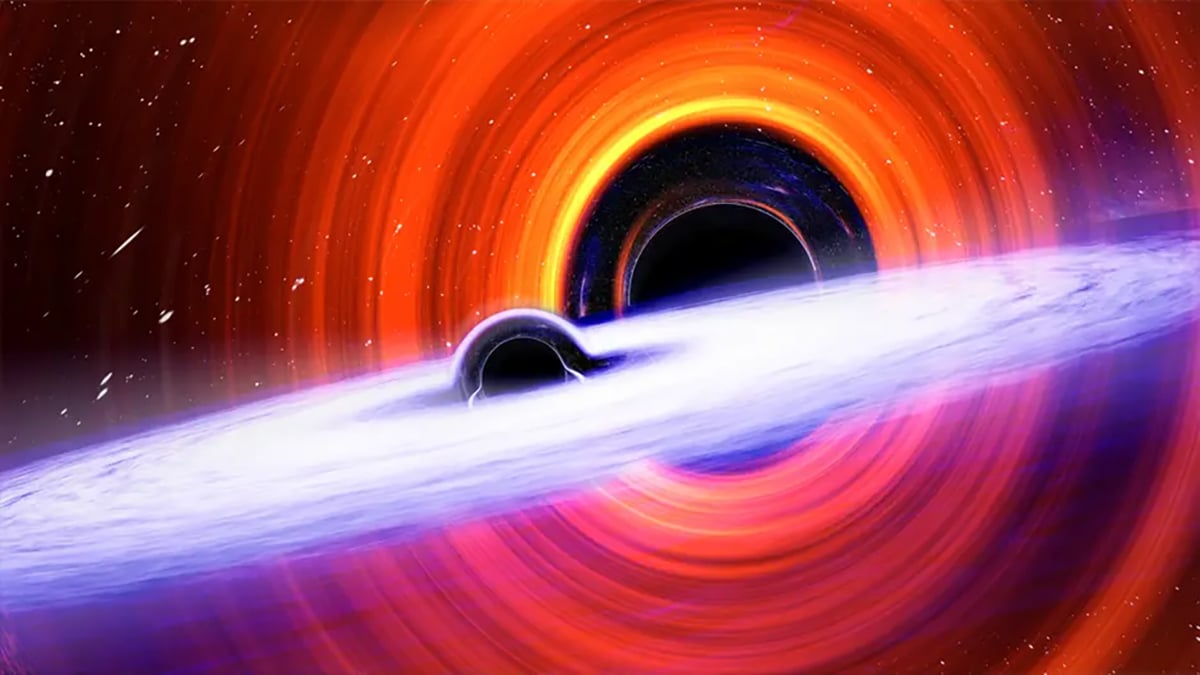
In a potentially groundbreaking development, researchers examining data from the LIGO gravitational wave detector have identified what could be humanity's first direct observation of a primordial black hole (PBH). These exotic objects represent something truly special in the cosmos: black holes theorized to have formed within a single second after the Big Bang from extraordinarily dense pockets of subatomic matter.
Unlike stellar black holes, which form when massive stars collapse at the end of their lives, primordial black holes would have emerged during the universe's most violent and chaotic period. Their very existence has remained theoretical—until now. This potential detection marks a watershed moment in astrophysics, offering the first tangible evidence that these cosmic ghosts might actually populate our universe.
Why does this matter? Primordial black holes have long fascinated physicists for a compelling reason: they could constitute dark matter itself. Dark matter makes up roughly 85% of the matter in the universe, yet we've never directly identified what it is. If primordial black holes exist in sufficient quantities, they might be the elusive dark matter that has puzzled scientists for decades.
The LIGO detector, which uses lasers to sense ripples in spacetime caused by cosmic collisions, has proven invaluable for black hole research. When two objects merge, they send gravitational waves cascading across the universe—waves that LIGO can detect with remarkable precision. The characteristics of the gravitational waves detected in this study match what scientists would expect from a primordial black hole collision.
However, scientists urge caution. Distinguishing a primordial black hole from other types requires careful analysis. The research community will undoubtedly scrutinize these findings thoroughly, comparing them against alternative explanations.
If confirmed, this discovery would represent more than just finding a new type of black hole. It could fundamentally reshape our understanding of the universe's first moments, solve the dark matter mystery, and open entirely new avenues for gravitational wave astronomy. We may be witnessing the beginning of a revolutionary chapter in cosmic exploration.
No comments yet. Be the first!