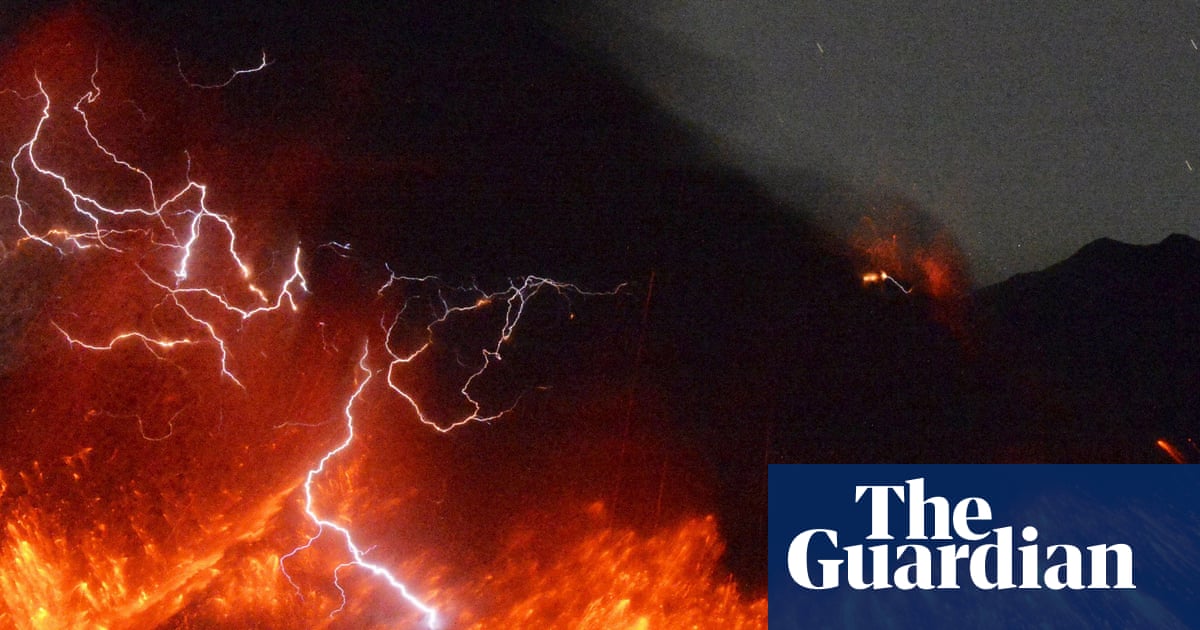
Imagine watching a volcano erupt and seeing brilliant flashes of lightning crackling through the towering ash clouds—it's breathtaking, but for decades, scientists have struggled to explain exactly why it happens. Now, thanks to cutting-edge research, we're closer than ever to solving this atmospheric mystery.
Volcanic lightning is undeniably spectacular. During major eruptions, enormous electrical discharges illuminate the darkness, creating a surreal light show amid the chaos of volcanic activity. Yet despite centuries of observation, the fundamental question remained: what causes it?
Researchers focused their attention on the catastrophic 2022 eruption of Hunga Tonga-Hunga Ha'apai in the South Pacific, one of the most powerful volcanic events in recent memory. By analyzing data from this eruption, scientists identified the key ingredient: ash particles colliding in the volcanic plume.
The breakthrough centers on particle interactions within the massive columns of ash and gas ejected during eruptions. As millions of tiny ash particles rush upward at incredible speeds, they collide with one another. These collisions generate static electricity—the same phenomenon that makes your hair stand up when you rub a balloon. However, in a volcanic plume, this happens on a staggering scale with trillions upon trillions of particles, creating electrical charges massive enough to produce lightning bolts.
This discovery has important implications beyond just satisfying our curiosity about nature's fireworks. Understanding volcanic lightning can help scientists better predict and monitor volcanic activity. The electrical signals associated with eruptions could potentially serve as warning indicators, giving communities more time to prepare for evacuation or other safety measures.
The research also enhances our broader knowledge of atmospheric electricity and how electrical phenomena develop in extreme environments. Scientists can now apply these insights to other high-energy atmospheric events and extreme weather systems.
While volcanic lightning remains one of nature's most awe-inspiring displays, it's no longer a complete mystery. As research continues to refine our understanding, we gain not only scientific knowledge but also practical tools to help protect communities living near active volcanoes.
No comments yet. Be the first!