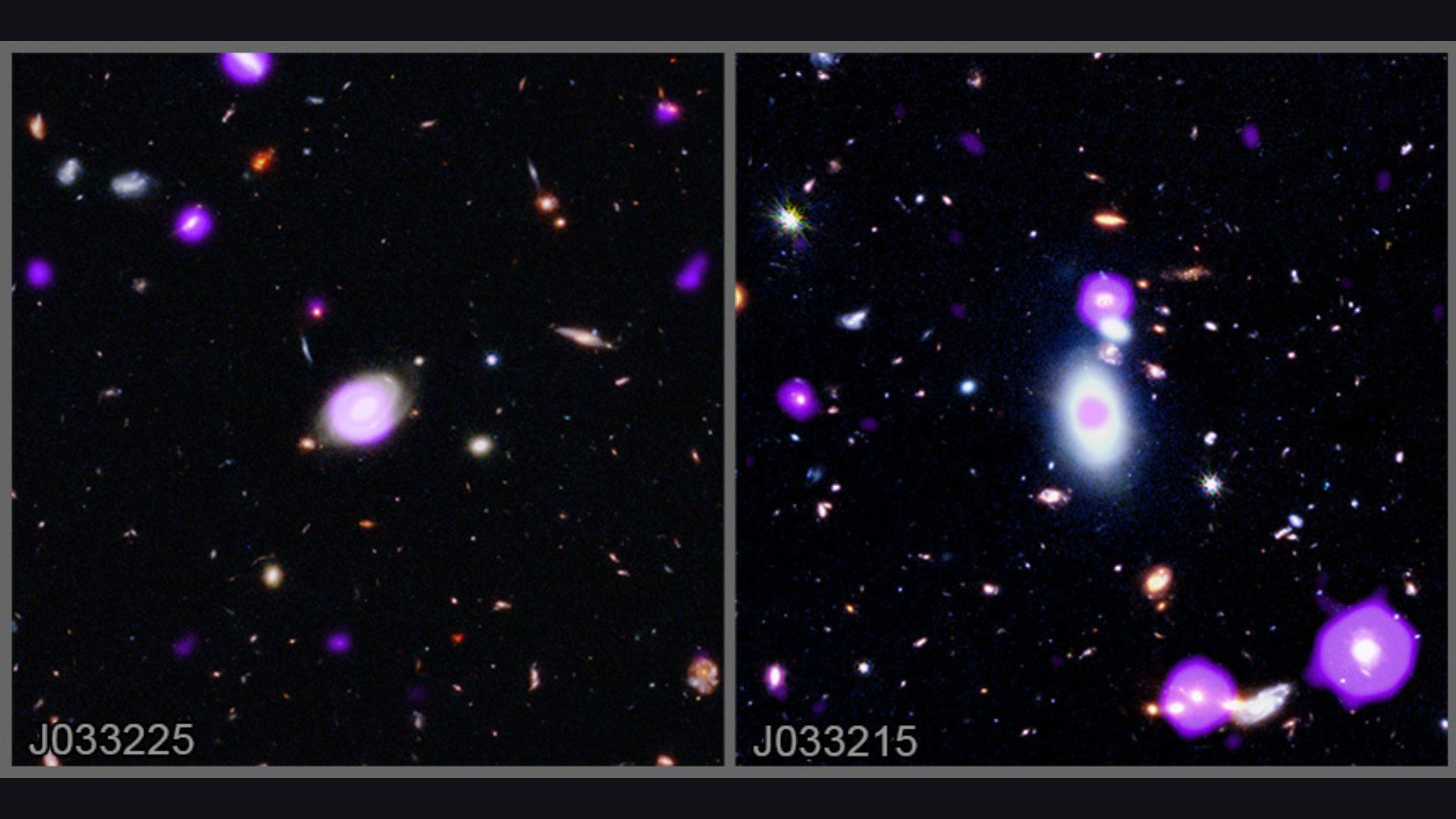
Imagine the universe's most powerful objects hitting a diet they didn't choose. That's essentially what's happening to supermassive black holes across the cosmos, according to a stunning new study that challenges our understanding of how these cosmic titans evolve.
For decades, astronomers have scratched their heads over a perplexing observation: the biggest black holes in the universe aren't growing nearly as fast as they used to. Now, after surveying an impressive 8,000 black holes, researchers believe they've cracked the case. The culprit? A severe shortage of available material to consume.
Black holes feed on the matter swirling around them—gas, dust, and stars that venture too close to their event horizons. This feeding process, called accretion, powers some of the brightest objects in the universe and fuels their growth. But here's the problem: the supply of cosmic snacks appears to be dwindling.
The research suggests that over the past 10 billion years, black holes have consumed much of the available material in their immediate neighborhoods. Without fresh fuel constantly arriving, even the most massive black holes must make do with scraps. It's like a ravenous beast that has already devoured everything within arm's reach and now has nothing left but slim pickings.
This discovery has profound implications for our understanding of galaxy evolution. Black holes don't exist in isolation—they actively shape their host galaxies through powerful outflows of energy and matter. When black holes are well-fed and actively accreting material, they influence star formation, redistribute galactic material, and fundamentally transform their cosmic environments.
As these cosmic monsters slow their feeding, the universe enters a quieter phase. The most intense black hole activity that characterized the earlier universe has largely subsided. This explains why we see far fewer extremely active supermassive black holes today compared to the distant universe we observe through our telescopes.
The implications are clear: black holes, like all living things, depend on their environment for sustenance. And in an aging universe, the feast is over.
No comments yet. Be the first!