Space is unforgiving. While ancient explorers could rely on gravity and natural resources, astronauts venturing beyond Earth's protective atmosphere face a completely different set of challenges. They're cut off from gravity, isolated from familiar environments, and dependent on supplies shipped from home. Among the most critical of these supplies is oxygen—the element that literally keeps us alive.
Certainly, scientists have found creative workarounds. Growing fruit in space is possible, but it requires tremendous effort and resources. Yet no amount of innovation can change the fundamental problem: you can't breathe in space, and transporting oxygen across the cosmos is inefficient and expensive.
This is where NASA's latest experiment comes in, offering a bold solution to one of space exploration's most pressing challenges.
**The Moon as a Resource Hub**
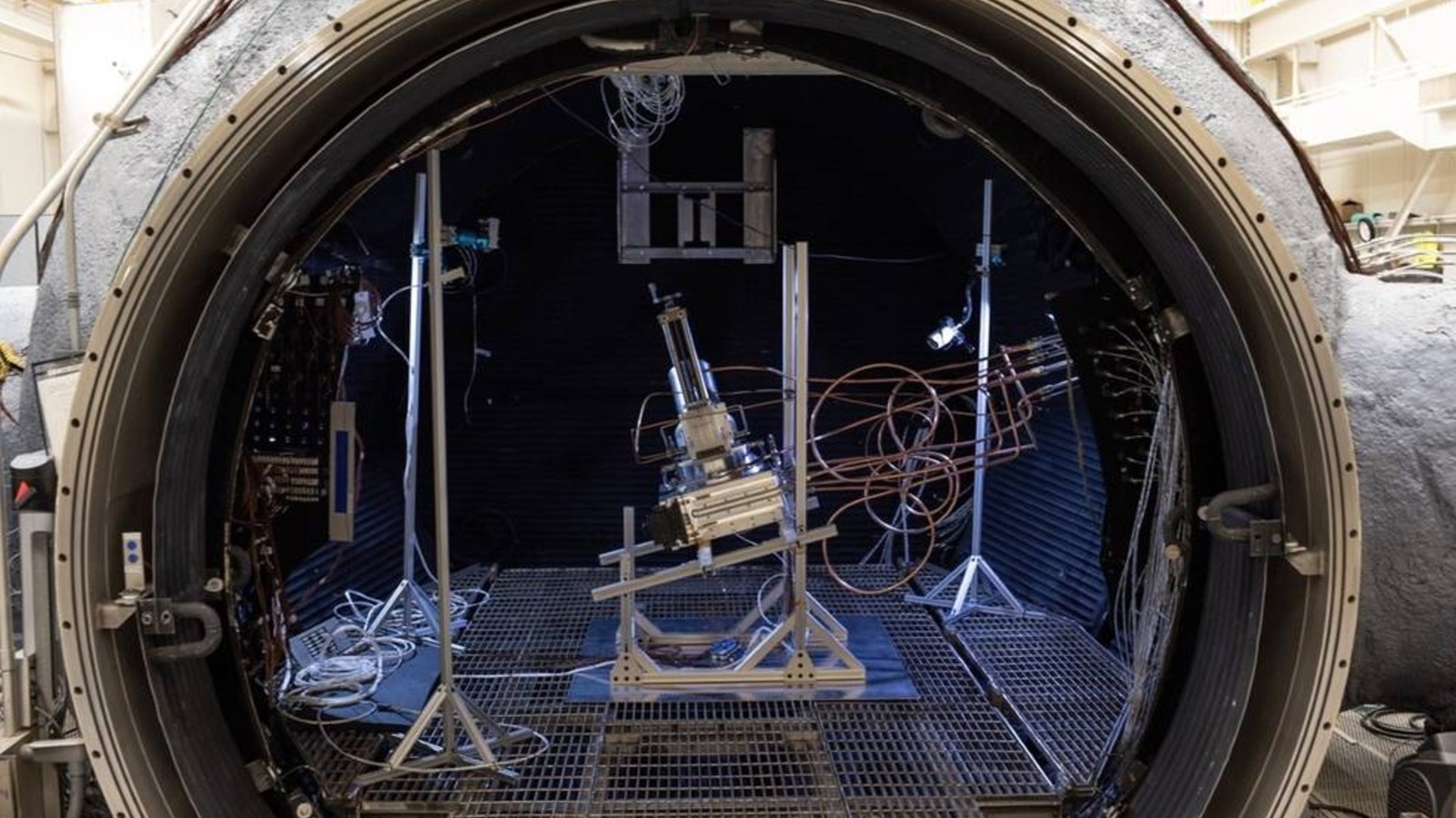
NASA is exploring an innovative approach to sustainability in space: extracting oxygen directly from lunar soil. The Moon, it turns out, might be the key to establishing self-sufficient human presence beyond Earth. Rather than relying entirely on resupply missions from home, astronauts could potentially generate their own oxygen on-site—a capability that would transform how we approach long-term lunar habitation.
This concept isn't entirely new to the scientific community, but NASA's hands-on experiment marks a significant step forward in making it practical and viable. By studying how to process lunar regolith (the powdery soil covering the Moon's surface), researchers hope to unlock the Moon's potential as more than just a destination—it could become a resource station.
**Why This Matters**
The implications are profound. Successfully extracting oxygen from lunar soil would address multiple challenges simultaneously. First, it reduces the payload astronauts must transport from Earth, making missions more efficient and cost-effective. Second, it enables longer stays on the Moon by ensuring a renewable source of breathable air. Third, it demonstrates the feasibility of using local resources for future deep-space exploration.
For space agencies planning ambitious missions to establish lunar bases and eventually reach Mars, this technology could be transformative. Instead of each mission being dependent on Earth's supply chain, a functioning oxygen extraction system would create genuine independence and sustainability.
**Looking Ahead**
While the science behind extracting oxygen from lunar soil is sound in theory, NASA's experimental work is crucial for proving it works in practice. The challenges are significant—harsh lunar conditions, equipment reliability in extreme environments, and processing efficiency all need to be solved.
But this is exactly the kind of innovative thinking that has always driven space exploration forward. By tackling the fundamental question of how humans can survive and thrive beyond Earth, NASA isn't just conducting an abstract science experiment. They're laying the groundwork for humanity's next giant leap into space.
The Moon, once thought of as an unreachable frontier, could become humanity's first truly self-sustaining outpost in the cosmos.
No comments yet. Be the first!