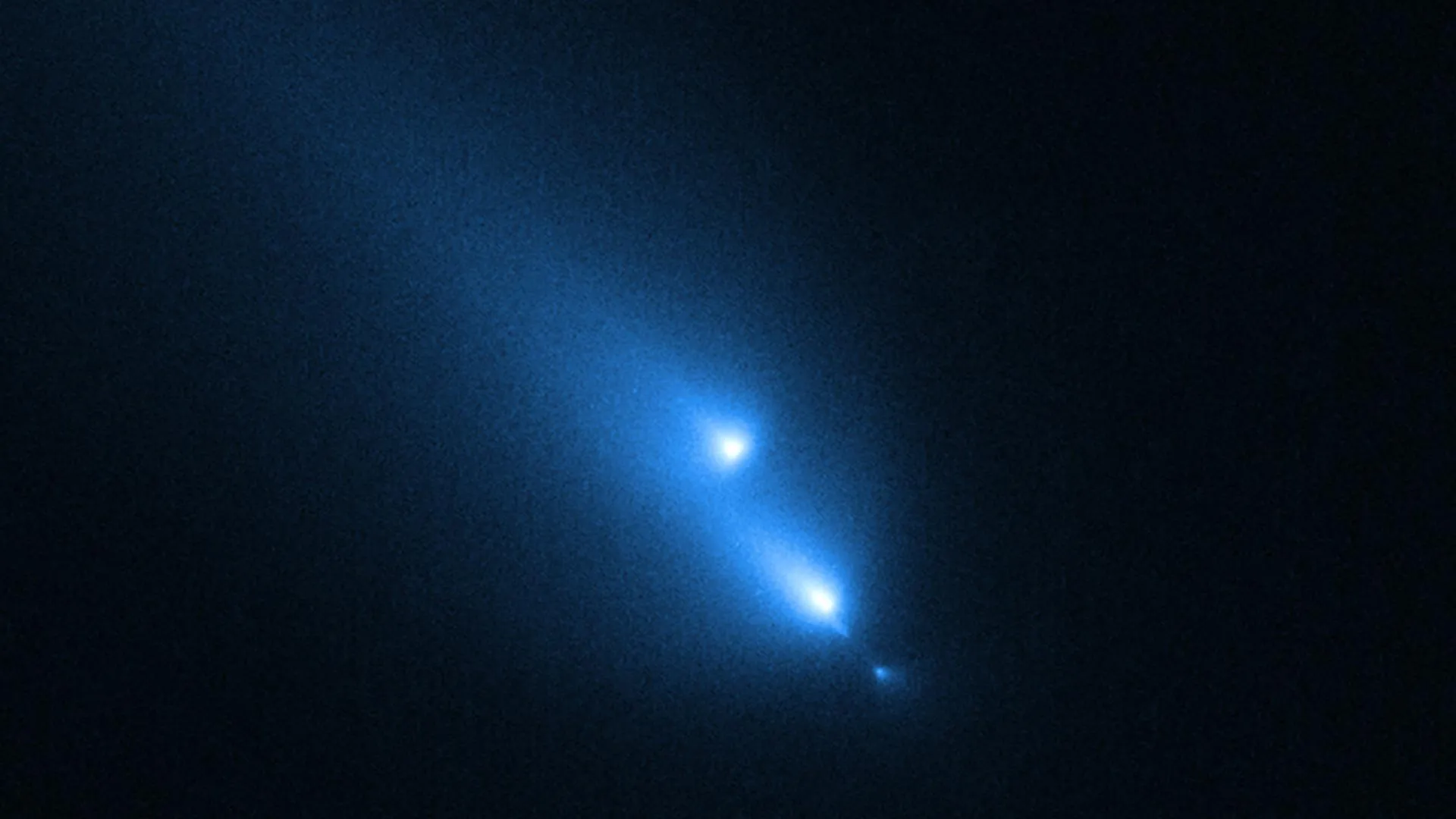
Sometimes the most incredible discoveries happen when you're not looking for them. That's exactly what occurred when NASA's Hubble Space Telescope stumbled upon an extraordinary cosmic event: Comet K1, formally designated C/2025 K1 (ATLAS), in the midst of a catastrophic breakup.
The discovery wasn't planned. As co-investigator John Noonan explained, "Sometimes the best science happens by accident." The Hubble team wasn't specifically tracking this comet when they made their observations. Instead, they were focused on other celestial targets when they noticed something remarkable happening in their data—a comet literally falling apart before their eyes.
This unexpected finding highlights one of the great advantages of modern space-based astronomy. While ground-based telescopes and space missions are designed with specific objectives in mind, the quality and precision of instruments like Hubble often reveal surprises that fundamentally expand our understanding of the cosmos.
**What Makes This Discovery Special?**
Comet disintegrations aren't entirely uncommon, but observing one in real-time with such clarity and detail is rare. The Hubble Space Telescope's superior resolution and position above Earth's atmosphere allowed astronomers to document the breakup with unprecedented detail. This provides invaluable data about the structural integrity of comets and the forces that cause them to fragment.
It's worth noting that this comet shouldn't be confused with the interstellar comet 3I/ATLAS, which generated its own scientific excitement in recent years. The designation system for comets can be confusing, but the distinctions are important for tracking different objects and their characteristics.
**Why This Matters for Astronomy**
Comet breakups offer scientists a unique window into understanding these icy remnants from the early solar system. By studying how and why comets fragment, researchers learn about their composition, structural weaknesses, and the environmental stresses that cause them to disintegrate. Each observation adds another piece to the puzzle of how these ancient travelers behave as they journey through space.
The fact that this discovery was accidental also reminds us that scientific progress isn't always linear. Some of humanity's greatest insights have come from unexpected observations and the flexibility to pursue promising leads wherever they appear.
**The Bigger Picture**
This serendipitous observation demonstrates why continued investment in space-based astronomy is crucial. While we design missions with specific goals in mind, the tools we create often exceed our initial expectations, revealing wonders we never anticipated. Hubble, which has been observing the universe for over three decades, continues to surprise us—proving that the cosmos still has plenty of secrets to share with those patient enough to look.
As our understanding of comets deepens through observations like this one, we move closer to answering fundamental questions about our solar system's origins and evolution. And sometimes, the best answers come when we're looking the other way.
No comments yet. Be the first!