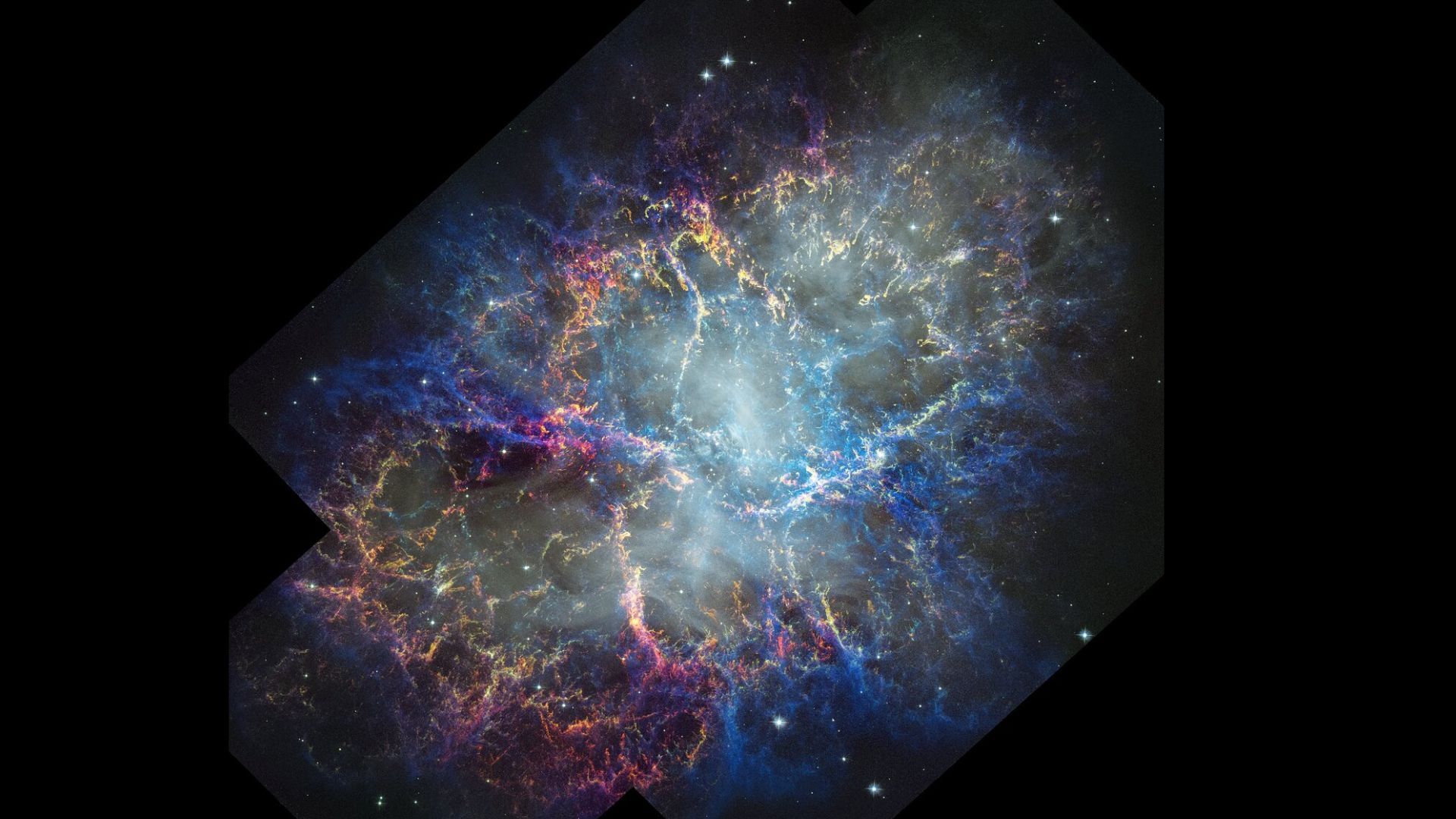
When we think of the Hubble Space Telescope, we often marvel at its ability to capture stunning images of distant galaxies and nebulae with unprecedented clarity. But there's something even more remarkable about this iconic observatory: its incredible longevity has allowed scientists to do something rarely possible in astronomy—track how cosmic objects actually evolve over time.
NASA recently released a stunning example of this capability: a side-by-side comparison of Hubble images of the Crab Nebula taken 25 years apart. The results are nothing short of spectacular, revealing dramatic changes in one of the most famous objects in our sky.
The Crab Nebula, remnant of a supernova explosion witnessed by Chinese astronomers in 1054 CE, has long captivated stargazers and scientists alike. Its intricate filaments and glowing gases create a cosmic artwork that seems frozen in time—until you compare photographs separated by decades. What Hubble has revealed is a nebula in constant motion, its structures shifting, expanding, and evolving in ways that provide crucial insights into how stellar explosions unfold across centuries.
This comparative observation exemplifies why the Hubble Space Telescope remains invaluable to modern astronomy, even as newer observatories join the cosmic surveillance network. While other telescopes excel at peering deeper into space or capturing different wavelengths of light, Hubble's sustained presence in orbit gives it a unique superpower: the ability to serve as a cosmic time machine, documenting how the universe changes not just across billions of years, but across the human timescale of decades.
For astronomers, these time-lapse views are like gold. They reveal the dynamics of cosmic phenomena that would otherwise appear static. The changes visible in the Crab Nebula over 25 years tell stories about the physics of supernova remnants, the behavior of ejected material, and the intricate processes that unfold when a star violently ends its life.
What makes this discovery particularly exciting is that it's just one example of what Hubble can do. The telescope has been observing the universe since 1990, meaning it has now accumulated decades of continuous observations of countless celestial objects. This archive represents an unprecedented resource for studying cosmic change and evolution.
The implications extend beyond mere curiosity. These long-term observations help astronomers refine their models of stellar physics, test predictions about how nebulae evolve, and develop a deeper understanding of the universe's dynamic nature. Every time we compare images decades apart, we're not just seeing pretty pictures—we're reading the cosmic history book.
As we look toward the future, with the James Webb Space Telescope now operational and other advanced observatories coming online, we're entering an exciting new era of astronomy. Yet the Hubble Space Telescope continues to prove that longevity and consistency in observation can reveal cosmic truths that even the most sophisticated new technology cannot match. The Crab Nebula, captured across 25 years, stands as a testament to the power of patient, persistent observation.
No comments yet. Be the first!